
What golf clubs should a beginner buy? A beginner should generally buy a beginner golf club set that includes a driver, a few fairway woods or hybrids, 6-iron through pitching wedge irons, and a putter, often opting for affordable golf clubs for new players or used golf clubs for beginners to start without a large initial investment.
Starting your golf journey is exciting! But looking at all the clubs can feel overwhelming. You need the right tools to learn the game well. This guide will help you pick the best starter golf clubs without breaking the bank or feeling confused. We will look at what you need, what you don’t, and how to make smart choices for your first set.
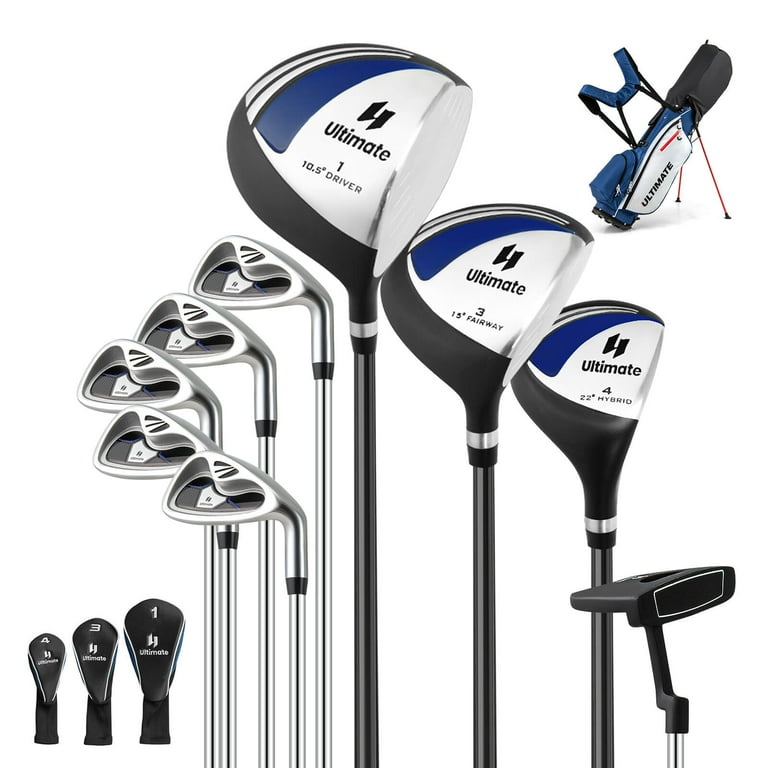
Image Source: i5.walmartimages.com
Why Club Selection Matters for New Golfers
Good clubs make learning easier. Bad clubs make hitting the ball tough. When you are starting, you need clubs that help you hit the ball high and far, even when your swing isn’t perfect yet. Clubs made for better players punish mistakes more. Beginner clubs forgive more mistakes. This means you get more success early on. More success keeps you wanting to play more.
The Basic Components of a Beginner Set
A full set of golf clubs has 14 clubs. However, a beginner does not need all 14 right away. Most starter sets offer between 9 and 12 clubs. Here is what you need:
- Driver: Used for the first shot on long holes (tee shots).
- Fairway Wood or Hybrid: Used for long shots off the grass.
- Irons: Used for shots of varying distances into the green.
- Wedge: Used for short shots around the green or out of sand.
- Putter: Used for rolling the ball on the green.
Deciphering Club Types for Beginners
Let’s look closer at each type of club. Knowing their purpose helps you choose.
The Driver: Your Power Stick
The driver is the biggest club. It has the largest head. It hits the ball the farthest.
Beginner Driver vs Fairway Wood
For beginners, the difference is important for confidence.
| Feature | Beginner Driver | Fairway Wood (usually #3 or #5) |
|---|---|---|
| Use | Tee shots only. | Shots from the fairway or light rough. |
| Head Size | Very large (460cc). | Smaller than a driver. |
| Forgiveness | High (designed to help slices). | High (especially hybrids). |
| Ease of Use | Harder to hit consistently at first. | Easier to get airborne off the grass. |
Tip: Most beginner golf club sets include a driver. Make sure it has a large head (460cc is standard) and a flexible shaft. A flexible shaft helps slower swing speeds generate more power.
Irons: Building Consistency
Irons are numbered. The lower the number, the lower the ball flies and the farther it goes (e.g., a 5-iron goes farther than a 9-iron).
Choosing Irons for New Golfers
Beginners need “game improvement” irons. These have specific features:
- Cavity Back Design: This is key. Instead of a solid back, there is a hollow area. This moves weight to the edges of the clubhead. This makes the club more stable on off-center hits.
- Wide Soles: A wider bottom part of the iron helps the club glide through the grass instead of digging in. This reduces “fat” shots.
- Loft: Beginner irons often have more loft than advanced clubs. More loft helps get the ball airborne quickly.
You need a set that covers your main distances. A good starting set of irons includes: 6-iron, 7-iron, 8-iron, 9-iron, Pitching Wedge (PW). Some sets add a Gap Wedge (GW).
What about Single Length Irons for Beginners?
Single length irons for beginners are an interesting option. All irons in this set are the same length, usually near the length of a standard 7-iron. The benefit is simpler setup. You use the same posture and swing for every iron shot. This can speed up learning consistency. However, they might not give you the exact yardage gaps between clubs that a traditional set offers. Consider these if finding a consistent posture is your biggest early challenge.
Hybrids vs. Fairway Woods
When replacing long irons (like the 3-iron or 4-iron), you will often see a choice between a fairway wood or a hybrid club.
Hybrids are a mix between an iron and a wood. They look like a small wood but have an iron shaft. They are much easier to hit consistently than long irons. Most pros and beginners use hybrids instead of 3 or 4 irons today. For your first set, look for a 5-iron, 6-iron, and then perhaps a Hybrid 4 or Hybrid 5.
Wedges: Short Game Control
You need clubs for shots close to the green.
- Pitching Wedge (PW): Usually comes with your iron set. Used for pitches about 80–120 yards (depending on your speed).
- Gap Wedge (GW) or Approach Wedge (AW): Closes the gap between your PW and Sand Wedge.
- Sand Wedge (SW): Used mostly for getting out of sand bunkers.
For your first year, a PW and maybe one other wedge (like a Sand Wedge) is enough. Do not buy specialty wedges until you can hit your PW consistently.
The Putter: Finalizing the Hole
The putter is vital. You use it on every single hole. Beginners should look for stability.
- Mallet Putters: These are large, often blade-shaped or geometric. They offer high forgiveness. If you don’t hit the middle of the face, they still roll smoothly.
- Blade Putters: These are smaller and classic looking. They offer less forgiveness.
Most beginners benefit from a larger, heavier mallet putter while they learn to control distance.
Choosing the Right Shaft: Flex and Material
The shaft connects the grip to the clubhead. It affects how far and straight you hit the ball. Shafts come in different materials (steel or graphite) and different levels of “flex.”
Graphite vs. Steel Shafts
| Shaft Material | Typical Use | Pros for Beginners | Cons |
|---|---|---|---|
| Graphite | Woods, Hybrids, and Beginner Irons | Lighter weight helps generate club speed easily. Absorbs vibration well. | Can sometimes feel less stable or “whippy.” |
| Steel | Standard Irons for experienced players. | Stiffer, better feedback, more control for fast swings. | Heavier; can hurt more on mishits for beginners. |
Recommendation: For your entire bag (driver, woods, and irons), choose graphite shafts. They are lighter, which helps beginners gain swing speed and lift the ball easier.
Shaft Flex
Flex describes how much the shaft bends during your swing. Slower swing speeds need more flex to launch the ball high.
- Ladies (L) or Senior (A) Flex: Very flexible. Good for slower swing speeds.
- Regular (R) Flex: The most common choice for new players, especially men under 60 or women with average speed.
- Stiff (S) Flex: For faster, stronger swingers. Beginners should avoid this unless they swing very hard naturally.
Deciphering Swing Speed: If you can barely hit a driver 150 yards, you likely need a Regular or Senior flex shaft. If you hit it 200 yards or more, Regular is a safe starting point.
Set Options: Boxes, Pre-Owned, or Custom?
When looking for what golf clubs should a beginner buy, you have three main paths.
1. Complete Beginner Golf Club Sets (Box Sets)
These are often the best starter golf clubs for absolute beginners. They are sold together in one box.
Pros:
* Affordable golf clubs for new players: Excellent price point.
* Matching Set: All clubs are designed to work together.
* Everything Included: Usually comes with a bag, headcovers, and all necessary clubs (driver to putter).
Cons:
* Limited Technology: They often use older technology.
* Shaft/Length Issues: The shafts and club lengths might not be perfect for your specific height.
Who are they for? Someone who is unsure if they will stick with golf and wants the lowest entry cost possible.
2. Building a Set Piece by Piece (Mix and Match)
This involves buying a driver here, irons there, etc. This is complex for a beginner and usually more expensive upfront. It is best saved for when you know what you like after a year or two.
3. Used Golf Clubs for Beginners
Buying pre-owned clubs is a fantastic budget-friendly option. Many older “game improvement” models from 5-8 years ago are excellent for beginners today.
Pros:
* Better Quality for Less: You can get a higher quality brand name set for the price of a new box set.
* Depreciated Value: If you decide golf isn’t for you, you lose less money selling them later.
Cons:
* Wear and Tear: You must inspect the grooves on the irons and the face of the woods for deep scratches.
* Shaft Age: Very old graphite shafts can become brittle.
Where to look: Local golf shops, online marketplaces, or specialized used club retailers.
Considering Height and Fit
A major factor often overlooked by new players is size. Clubs that are too long or too short cause bad habits.
Junior Golf Clubs vs Adult Beginner
If you are buying for a child, junior golf clubs vs adult beginner sets is a critical distinction. Junior clubs are shorter and lighter. Never buy adult clubs for a child unless they are nearly full height (5’6″ or taller). An adult club that is too long forces a child to stand up too straight, causing slices and poor contact.
Basic Height Sizing for Adults
For adults, clubs usually come in standard length. However, if you are significantly shorter (under 5’3″) or taller (over 6’2″), you might need adjustments:
- Shorter Players: Need clubs that are “shorter” (shafts cut down) or have “flat” lie angles (the clubhead sits flatter on the ground).
- Taller Players: Need clubs that are “longer” (shafts extended) or have “upright” lie angles (the clubhead sits more upright).
This level of detail often requires a golf club fitting for beginners, which sounds intimidating, but even a basic check at a golf store can help prevent early swing issues related to ill-fitting equipment.
The Critical Role of Golf Club Fitting for Beginners
Many think golf club fitting for beginners is only for low-handicap players. This is false. A fitting ensures the foundational elements—shaft flex, length, and grip size—match your body.
A good beginner fitting focuses on:
- Lie Angle: Is the clubhead sitting square to the ground when you hit the ball? If it’s too flat or too upright, you’ll push or pull shots often.
- Shaft Flex and Material: As discussed, matching swing speed to the shaft flex is vital for launching the ball high.
- Grip Size: If the grip is too thin, you grip too tightly, causing tension. If it’s too thick, you might struggle to square the face.
While a full, high-tech fitting might be overkill initially, spending a little extra to ensure your beginner golf club sets are the right length/flex combination is money well spent for long-term development.
How Many Clubs Do I Really Need?
The rules allow up to 14 clubs. Beginners should aim for far fewer. Why?
- Less Decision Making: When you have fewer options, you focus on making solid contact with the club you choose.
- Cost Savings: You only buy what you use.
- Bag Weight: Fewer clubs mean a lighter bag to carry while walking the course.
The Essential 9-Club Starter Set
If you buy separate clubs or a set that allows customization, aim for these nine clubs:
| Club Type | Recommended Loft/Number | Purpose |
|---|---|---|
| Driver | 10.5° to 12° loft | Tee shots |
| Fairway Wood/Hybrid | 3-wood or 5-wood (or 4-hybrid) | Long shots off the deck |
| Irons | 6, 7, 8, 9 | Mid-range approach shots |
| Wedges | Pitching Wedge (PW) and Sand Wedge (SW) | Short approach and bunker shots |
| Putter | Standard Mallet or Blade | Rolling the ball on the green |
This set gives you coverage for 95% of the shots you will face as a new golfer. You skip the 3-iron, 4-iron, 5-wood, and specialty wedges until your game matures.
Ball Selection: Don’t Forget the Golf Ball!
Clubs are only half the battle. Golf balls are critical. Do not start with expensive tour-level balls. These balls are designed for high swing speeds and need compression to spin correctly.
Affordable Golf Balls for New Players
Look for balls labeled:
- Distance/Low Compression: These balls are softer. They fly straighter for average swing speeds and are easier to hit.
- Used/Refinished Balls (AAA Grade): Buying used balls is the best way to save money. If you are losing balls frequently (and you will!), buying premium used balls is much cheaper than buying new budget balls.
Maintaining Your Beginner Clubs
Even affordable clubs need care. Good maintenance helps them last longer and perform better.
Cleaning Routine
- After Every Round: Wipe down the faces of your irons and woods. Use a soft cloth to remove dirt and grass. Dirt hides the grooves, making it hard to grip the ball.
- Deep Clean Monthly: Use warm, soapy water and a soft brush (like an old toothbrush). Scrub the grooves gently. Rinse well and dry immediately.
Shaft Care
If you have graphite shafts, avoid scraping them heavily against concrete or metal cart frames. While tough, deep gouges can weaken the shaft structure.
Grip Replacement
Grips wear out faster than shafts or clubheads. Worn grips become slick, causing you to squeeze the club too hard. If your grips look shiny, cracked, or feel hard, replace them. New grips are inexpensive and make a huge difference in feel and control.
Moving Beyond the Beginner Set: When to Upgrade
How long should you stick with your beginner golf club sets? This depends on your progress and commitment.
Signs It’s Time to Upgrade
- You Know Your Distances: You hit your 7-iron consistently 120 yards, not a random 90 or 150 yards.
- You Rarely Mishit the Center: Most of your shots come off the middle of the clubface.
- You Want More Workability: You are starting to want to shape shots slightly (e.g., hit a slight fade instead of a straight ball).
- Shafts Feel Wrong: You constantly feel like your drives are going too high (shaft too flexible) or too low (shaft too stiff).
This usually happens after one to three years of regular play. When you upgrade, you might start looking into golf club fitting for beginners again, but this time focusing on specialized sets like players’ cavity backs or custom shaft options.
Final Checklist for Buying Beginner Clubs
Use this quick list when shopping for your first set.
| Item | Consideration for Beginners | Goal |
|---|---|---|
| Set Type | Box Set or Quality Used Set | Maximize forgiveness on a budget. |
| Shafts | Graphite, Regular (R) or Senior (A) Flex | Ensure easy launch and clubhead speed. |
| Irons | Cavity Back, Wide Sole | Forgiving on off-center strikes. |
| Woods | Large Driver Head (460cc), High Loft (10.5°+) | Easier to get airborne. |
| Hybrids | Prefer Hybrid over 3 or 4 Iron | Easier distance replacement for long irons. |
| Grips | Medium thickness, soft feel | Comfortable and non-slip. |
By focusing on forgiveness, correct shaft flex, and a sensible number of clubs, your initial purchase will support your growth in the game rather than hinder it.
Frequently Asked Questions (FAQ) About Beginner Golf Clubs
H5: Should I buy expensive clubs when I start?
No. It is best to start with affordable golf clubs for new players, like a reputable box set or quality used golf clubs for beginners. Golf is hard to learn. You might change your mind, or your swing might change rapidly. Spending a fortune on clubs when you are still learning impact is usually not wise.
H5: Do I need a 3-wood if I have a good driver?
Not right away. Many beginners struggle to hit a 3-wood off the grass. A 5-wood or, even better, a 4-hybrid is often easier to launch high and control. Focus on mastering your driver first.
H5: How important is getting a golf club fitting for beginners?
While a full fitting might be unnecessary, checking basic measurements like grip size and shaft flex is crucial. A poorly sized club causes immediate discomfort and bad habits. Many big-box stores offer free or low-cost swing assessments that can guide you toward the right shaft flex.
H5: Can I play golf with only half a set?
Yes, absolutely. If you are focused only on practice, you can start with just a 7-iron, a wedge, and a putter. However, for playing a full round on the course, aim for at least the essential 9 clubs listed above to handle tee shots, approaches, and short game.
H5: What is the main benefit of game improvement irons?
The main benefit of choosing irons for new golfers that are “game improvement” style (cavity back) is forgiveness. They help keep the ball straighter and closer to your intended target even if you don’t hit the absolute center of the clubface perfectly.