
Disk golf is played much like traditional golf. You throw a special disc from a starting spot, called a tee pad, toward a metal basket target. The goal is to get the disc into the basket using the fewest throws possible.
Disk golf, often shortened to disc golf, is a fast-growing sport enjoyed by people of all ages. It combines the skill of throwing a frisbee with the structure of golf. If you’ve ever wondered how to start playing this fun game, this guide is for you. We will cover everything a beginner needs to know, from the gear to the final score.
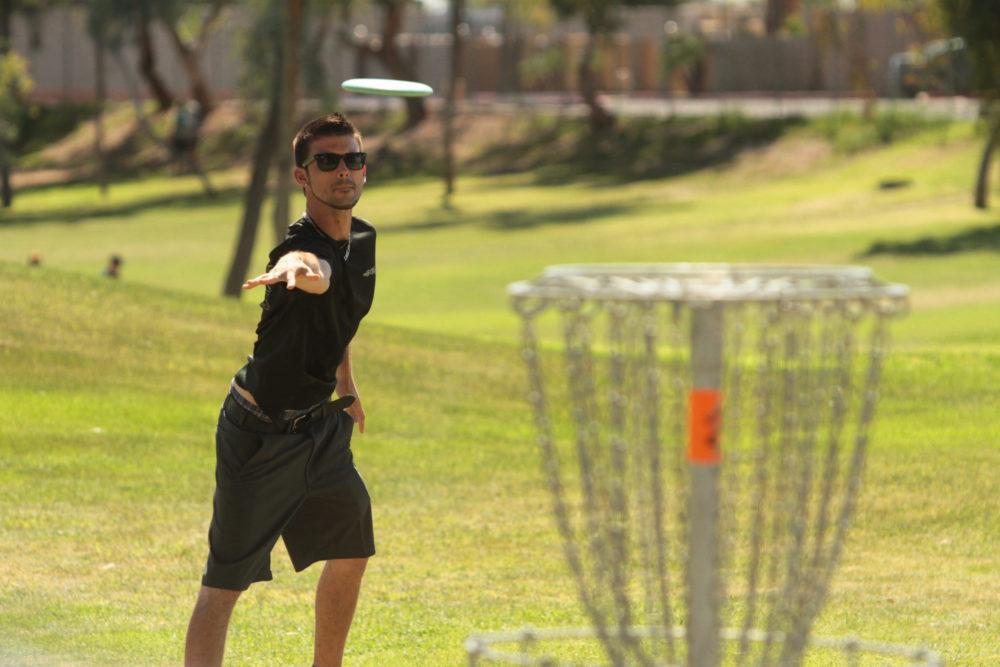
Image Source: discgolf.com
Essential Disc Golf Equipment
Before you step onto the course, you need the right tools. You cannot play disc golf well with just any old frisbee. Essential disc golf equipment focuses on specialized discs designed for distance, accuracy, and control.
The Three Main Types of Discs
For learning disc golf techniques, having the right discs makes a huge difference. Most players carry a small bag with three types of discs.
| Disc Type | Primary Use | Speed Rating (Approximate) | Glide Rating (Approximate) |
|---|---|---|---|
| Putter | Short, accurate throws near the basket. | Low (1–4) | Low (1–3) |
| Mid-Range | Approach shots, medium-length throws needing control. | Medium (5–6) | Medium (4–5) |
| Driver | Long throws off the tee pad to cover maximum distance. | High (10–14) | Medium to High (4–6) |
New players often ask if they need many discs. For starting out, one quality putter, one mid-range, and one fairway driver (a slower driver) are enough. This keeps things simple while you learn how to throw a golf disc properly.
Setting Up for the Game: The Disc Golf Course Layout
A disc golf course is similar to a ball golf course. Instead of holes in the ground, you aim for metal baskets with chains. Disc golf course layout dictates the flow of play.
Tee Pads and Fairways
Courses are set up with distinct areas for each ‘hole’:
- Tee Pad: This is where you start. It is usually a concrete slab or a marked area on the grass. You must throw your first shot from within this designated area.
- Fairway: This is the main path between the tee pad and the target. It might be open field, wooded, or have obstacles like trees and water.
- Target (Basket): The basket has a pole, a catch area (the basket itself), and chains hanging above the basket. The chains catch the disc and drop it into the lower tray.
Courses usually have 9 or 18 holes. Each hole has a designated distance and a “par” rating. Par is the expected number of throws an expert player needs to get the disc in the basket.
Grasping the Basics: Disc Golf Rules
Like any sport, disc golf has rules to keep play fair and safe. Disc golf rules are quite simple for casual play, but good to know as you get more serious.
Teeing Off
- The player who scored lowest on the previous hole tees off first on the next hole. This player is said to have “the honor.”
- All players throw their first shot from behind the tee pad marker.
- Once you step across the front line of the tee pad during your throw, your turn is over.
Fair Play on the Fairway
When playing a round of disc golf, players take turns based on who is farthest from the target basket.
- The player whose disc is furthest from the basket throws next. This ensures everyone waits their turn patiently.
- You must throw from the spot where your last shot landed. This spot is called the “lie.”
- If your disc lands in a hazard, like water or thick brush, the rules may allow you to move it one disc length (about 10 inches) away from the hazard, without moving it closer to the basket.
Finishing the Hole
You must throw your disc from directly behind where it came to rest for the next shot. You cannot move your lie forward until you have completed your throw. The hole is finished only when your disc comes to rest inside the basket or is supported by the chains, resting against the pole or the bottom tray. If the disc lands on top of the cage and does not fall in, it is not considered in the basket.
Deciphering Disc Golf Scoring
Understanding disc golf scoring follows the same system as traditional golf. Your score is the total number of throws you take to complete the hole.
| Term | Definition | How to Score |
|---|---|---|
| Par | The expected number of throws for an expert. | The target score. |
| Birdie | One throw under par. | Score of 2 on a Par 3 hole. |
| Par | Taking the expected number of throws. | Score of 3 on a Par 3 hole. |
| Bogey | One throw over par. | Score of 4 on a Par 3 hole. |
| Eagle/Albatross | Two or three strokes under par (rare for beginners). | Score of 1 on a Par 3 hole (Hole-in-One). |
At the end of the round, you add up the scores for all the holes. The player with the lowest total score wins.
How to Throw a Golf Disc: The Basics of Flight
Learning how to throw a golf disc takes practice. Unlike a casual frisbee toss, disc golf throws are about power, spin, and the angle of release.
The Backhand Throw
The backhand is the most common throw for beginners. It uses a full-body motion for maximum distance.
- Grip: Hold the disc firmly but not too tightly. Your index finger should be tucked under the rim, and your thumb should rest firmly on top.
- Stance: Stand sideways to your target. Your non-throwing side should face the target (left side for right-handers).
- The Pull: Start by bringing the disc back toward your hip. Then, quickly rotate your hips and shoulders forward, like throwing a baseball sidearm.
- Release: As the disc comes across your chest, snap your wrist forward at the moment of release. This adds spin, which keeps the disc stable in the air.
Understanding Disc Flight Paths
Discs are designed to fly in specific ways based on their shape and weight. This is often described by three numbers molded into the disc: Speed, Glide, and Turn/Fade.
- Turn: How much the disc curves in the direction of the throw initially (e.g., right for a right-hand backhand thrower).
- Fade: How much the disc curves opposite the initial turn as it slows down near the end of its flight (e.g., left for a right-hand backhand thrower).
Beginners should focus on using slower discs (putters and mid-ranges) first. They are easier to control and reveal flaws in your throwing form much faster than high-speed drivers.
Course Play: Playing a Round of Disc Golf
Playing a round of disc golf is a relaxing, walkable activity. Enjoying the environment is just as important as your score.
Teeing Off Safely
Always check that the fairway is clear before throwing. Shouting “Fore!” loudly if your disc flies wildly off course is standard practice to warn others.
Marking Your Lie
If your disc lands in a difficult spot, you need to mark where it lies. Use a small marker disc (sometimes called a ‘mini’) placed on the ground directly in front of where your thrown disc stopped. This is your lie for the next throw. You must move your actual disc behind the mini marker before you can throw again, unless you are putting.
Putting Near the Basket
When you are within 10 meters (about 33 feet) of the basket, your focus shifts entirely to accuracy. This is called “putting.”
- For putting, most players use a softer, slower motion, often involving a slight hop forward after the throw.
- A crucial disc golf rule regarding putting is the “circle one rule.” Once your lie is within 10 meters of the basket, you cannot have your back foot move past where the previous throw landed until the disc has been released. This prevents players from taking an unfair running start at the chains.
Playing Disc Golf Etiquette
Good behavior makes the sport enjoyable for everyone. Playing disc golf etiquette ensures courses stay welcoming.
- Be Ready: Be prepared to throw when it is your turn. Don’t fumble through your bag while others are waiting.
- Keep Pace: Do not spend too long looking for lost discs. If the course is busy, play quickly to keep up with the group ahead of you.
- Respect the Course: Do not damage trees or throw discs into sensitive areas unnecessarily. Pack out any trash you see.
- Be Courteous: Allow faster groups to “play through” if you are moving slowly. Always yield the right of way to people not playing the game.
Advanced Topics: Disc Golf Terminology
As you play more, you will hear specific phrases. Disc golf terminology helps you communicate with other players.
- Ace (Hole-in-One): Throwing the disc directly from the tee pad into the basket.
s Up Shot:* A long approach shot used to get close to the basket for an easy putt. - Air Mail: When a throw flies perfectly straight and lands exactly where you intended.
- Hyzer/Anhyzer: These describe the angle of the disc upon release.
- Hyzer: The inside edge of the disc is lower than the outside edge at release (for a right-hand backhand, this makes the disc fly left, then straighten or fade right).
- Anhyzer: The outside edge of the disc is lower than the inside edge (for a right-hand backhand, this makes the disc turn right).
Learning Disc Golf Techniques: Beyond the Basics
Once you master the basic backhand, you can start exploring more complex shots required by varied disc golf course layout.
The Forehand (Sidearm) Throw
This throw is thrown across the body, usually swinging the arm from right to left (for a right-handed player). It is essential for navigating tight doglegs (corners in the fairway) or throwing around obstacles. It requires a different grip, often involving the index finger pushing against the rim.
The Roller
This is an advanced technique used when you cannot get the necessary height or when you are throwing through very dense woods. You throw the disc so it lands on its edge and rolls along the ground toward the target. It is a high-risk, high-reward shot.
Improving Your Game with Beginner Disc Golf Tips
Success in disc golf comes from patience and smart practice. Here are some key beginner disc golf tips to speed up your development:
- Start Slow: Do not buy 10 high-speed drivers right away. Focus on control with putters and mid-ranges first. If you can throw a mid-range 150 feet accurately, you are ready for a driver.
- Practice Putting Often: Putting accounts for the majority of strokes saved. Spend 15 minutes practicing putts (5 to 15 feet out) before or after every round.
- Watch the Pros: Observe how experienced players walk up to the tee, how they release the disc, and how they navigate tricky lies.
- Use the Right Grip for the Right Shot: Grip pressure is key. A lighter grip is better for distance throws to allow the disc to “uncage” itself in the air. A firmer grip is needed for precise putting.
- Aim Small, Miss Small: When throwing, pick a specific spot on the tree or patch of grass you want to hit, rather than just aiming generally at the basket.
Frequently Asked Questions (FAQ)
What is the minimum number of discs needed to play disc golf?
Technically, you only need one disc. However, for a better experience, carrying at least three—one putter, one mid-range, and one driver—is highly recommended to handle different distances effectively.
Can I use a regular frisbee to play disc golf?
While you can play casually with a standard recreational frisbee, it will not fly predictably or travel as far as a dedicated golf disc. Golf discs are thinner, heavier, and designed to cut through the air more efficiently.
How long does it take to play a round of disc golf?
For an 18-hole course, a beginner group might take 2 to 3 hours. Experienced players can often complete 18 holes in about an hour and a half, depending on the course length and foot traffic.
What is the difference between disc golf and ultimate frisbee?
Ultimate frisbee is a team sport played with a large, flexible disc focused on running and catching. Disc golf is an individual sport played with smaller, denser discs aimed at distance and accuracy toward a stationary target, using golf scoring.
How should I choose my first disc golf driver?
Look for a driver with a low speed rating, usually between 6 and 8. Choose discs labeled as “understable” or “neutral.” These discs are more forgiving of bad throws and will teach you proper mechanics faster than very fast, overstable discs.