
If you wonder what size golf clubs you need, the simple answer is that the right size depends mainly on your height, arm length, and swing speed. Getting the correct size is crucial for hitting the ball well and avoiding bad habits. This golf club fitting guide will help you figure out exactly what you need. We will look at length, lie angle, shaft flex, and other key parts of a good fit.
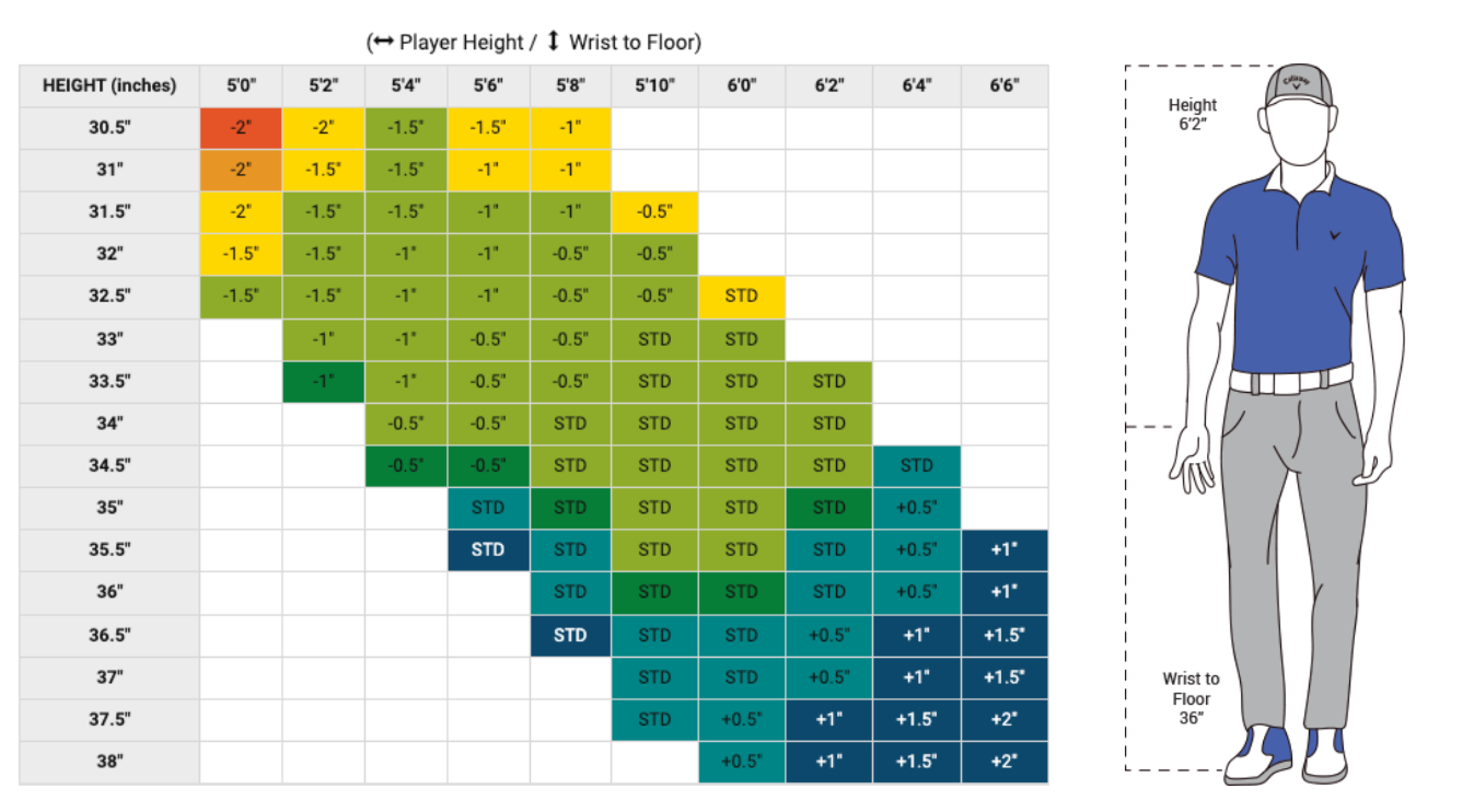
Image Source: images.contentstack.io
Why Club Size Matters So Much
Using clubs that are too long, too short, or have the wrong stiffness causes problems. Your swing path gets messy. You might hit the ball thin or fat. You lose distance and accuracy. A proper fit makes golf easier and more fun. Think of it like wearing shoes. Wrong-sized shoes hurt your feet. Wrong-sized clubs hurt your game.
Step 1: Assessing Your Basic Physical Measurements
The starting point for any good fit involves measuring you. This is the first big step in finding the right golf club length.
Height and Club Length
Your height is the most common starting point. Taller players generally need longer clubs. Shorter players need shorter clubs. This ensures you stand at a comfortable angle over the ball.
| Height Range (Feet/Inches) | Standard Club Length Adjustment |
|---|---|
| Under 5’0″ | Subtract 1 to 2 inches |
| 5’0″ to 5’6″ | Subtract 0.5 to 1 inch |
| 5’7″ to 6’0″ | Standard Length (No change) |
| 6’1″ to 6’4″ | Add 0.5 inch |
| Over 6’4″ | Add 1 inch or more |
This chart gives a baseline. It is not the final answer.
Arm Length and Wrist-to-Floor Measurement
Your arm length is often more important than just height. Two people of the same height can have different arm lengths. This is why the wrist-to-floor measurement is vital.
How to Measure Wrist-to-Floor:
- Stand up straight. Wear your normal golf shoes.
- Have a friend measure the distance from the floor to the crease of your wrist.
- Measure in inches. This number strongly guides the required club length.
A longer arm length usually means you need a slightly longer shaft to keep your posture correct.
Step 2: Determining the Best Golf Club Lie Angle
The lie angle is often missed but is critical for consistent contact. It is the angle between the center of the club shaft and the sole (bottom) of the club head when it sits flat on the ground.
What is the Best Golf Club Lie Angle?
If the lie angle is wrong, the toe or the heel of the club will dig into the ground at impact.
- Too Upright (Toe points up at address): The ball tends to go left (for a right-handed golfer).
- Too Flat (Toe points down at address): The ball tends to go right (for a right-handed golfer).
Finding the Right Lie Angle:
The lie angle is set based on your height and wrist-to-floor measurement. A shorter player usually needs a flatter lie angle. A taller player often needs a more upright lie angle.
During a custom golf club fitting, a fitter watches where your divots land. If your divots consistently point toward the target line, your lie angle might be close. If they point significantly left or right, the lie angle likely needs adjustment.
Key Takeaway: Getting the best golf club lie angle involves matching the club head square to the ground at impact based on your posture.
Step 3: Selecting Golf Club Loft
Loft is the angle of the clubface. It dictates how high and how far the ball flies. Loft is crucial for distance control and trajectory.
Selecting Golf Club Loft Correctly
This is not about size, but it is a vital part of the fitting process. Modern clubs often have higher lofts than older models.
- Driver Loft: Typically ranges from 8 to 12 degrees. Higher loft helps slower swingers launch the ball higher. Faster swingers usually benefit from lower loft for more distance.
- Irons Loft: Iron lofts have been “jacked” in recent years. A modern 7-iron might have the loft of an older 6-iron.
When getting fit, the fitter uses launch monitor data to find the loft that produces the ideal combination of high launch angle and low spin for maximum carry distance. Too little loft leads to a low, spinning ball. Too much loft causes the ball to balloon upwards and lose distance.
Step 4: The Crucial Element – Shaft Flex
Shaft flex is perhaps the most important fitting component after length. It directly relates to your swing speed. Determining golf club shaft flex is based on how fast you swing the club.
What is Swing Speed?
Swing speed is measured in miles per hour (MPH). It tells the fitter how fast the club head is moving when it hits the ball. This is where golf club swing speed measurement becomes essential. A good fitter uses a launch monitor to get this data accurately.
| Swing Speed (Driver MPH) | Suggested Shaft Flex |
|---|---|
| Below 70 MPH | Ladies (L) or Senior (A) |
| 70 – 85 MPH | Senior (A) or Regular (R) |
| 86 – 98 MPH | Stiff (S) |
| 99 – 110 MPH | Extra Stiff (X) |
| Above 110 MPH | Extra Stiff Plus (XX) |
Flex Categories Explained
- Ladies (L): Very soft. Designed for slower speeds.
- Senior (A): Softer than Regular. Good for players with moderate or slowing swing speeds.
- Regular (R): The most common flex. Good for average male golfers.
- Stiff (S): For faster swingers who need more stability through impact.
- Extra Stiff (X): For powerful players who generate high club head speeds.
If your shaft is too soft, the club head lags behind, causing hooks and excessive spin. If the shaft is too stiff, you lose distance because the shaft cannot properly load and release energy at impact.
Step 5: Considering Grip Size
Grip size affects your hand action and release. This factor is often overlooked in DIY fitting but is a key part of custom golf club fitting.
How Grip Size Affects Your Swing
- Grip Too Small: You tend to grip the club too tightly. This can cause excessive wrist action (flipping) and often leads to slices.
- Grip Too Large: You cannot get your fingers fully around the club. This can cause you to keep the face open, also leading to slices or weak shots.
Measuring Grip Size:
The measurement is based on the distance from the center of your ring finger to the heel pad of your palm.
- Standard Size: Fits most adult male golfers.
- Midsize/Oversize: Good for players with larger hands or those who tend to over-activate their wrists.
- Undersize: Good for players with smaller hands or those who tend to hook the ball.
Special Considerations: Junior vs. Adult Golf Club Size
Fitting a child is very different from fitting an adult. Junior vs adult golf club size requires a focus on weight and length ratios.
Fitting Children
Children should use clubs designed specifically for them, not cut-down adult clubs.
- Weight is Key: Junior shafts must be much lighter than adult shafts. A child swinging a heavy adult club cannot achieve a proper, rhythmic swing.
- Length: Clubs must match the child’s height.
- Flex: Junior shafts are very flexible to match their lower swing speeds.
As a child grows, they usually need new sets every one to two years. Use the golf club sizing chart for height specific to junior sets as a guide.
Special Considerations: Senior Golf Club Specifications
As golfers age, swing speed naturally decreases, and flexibility lessens. Senior golf club specifications must adapt to these changes.
Adjustments for Senior Golfers
- Shaft Flex: Seniors almost always benefit from softer flexes—Senior (A) or sometimes Regular (R). This helps maximize distance lost due to reduced speed.
- Weight: Lighter overall club weight (lighter heads and shafts) helps maintain swing speed without straining the body.
- Loft: Often, slightly more loft (especially in the driver) helps launch the ball higher for better carry, compensating for lower launch angles.
The Role of a Professional Fitting Session
While this guide gives you the necessary knowledge, executing the fitting requires specialized tools and knowledge. That is where a professional session shines.
What Happens During a Custom Golf Club Fitting?
A true custom golf club fitting goes beyond basic measurements. It is an analysis of your total swing dynamics.
- Initial Assessment: The fitter measures your height, wrist-to-floor, and watches your setup.
- Ball Flight Analysis: You hit shots with various demo clubs. A launch monitor captures crucial data:
- Club Head Speed
- Ball Speed
- Launch Angle
- Spin Rate
- Carry Distance
- Component Adjustment: Based on the data, the fitter fine-tunes:
- Shaft material (graphite vs. steel) and flex.
- Club length (for optimal posture).
- Lie angle (to ensure square contact).
- Loft (to optimize trajectory).
- Grip size.
This detailed process ensures every single club in your bag works with your swing, not against it.
Deciphering Club Head Weight and Material
Club head weight plays a role in overall feel and swing speed, especially in woods and hybrids.
Head Weight Implications
Heavier heads can sometimes help golfers with very fast swings maintain control. However, for the average amateur, a lighter head material, like titanium in drivers, allows them to swing faster, thereby adding distance. If you struggle with tempo, a slightly lighter overall club weight might improve consistency.
The Impact of Different Club Types
The fitting process must be repeated for different types of clubs.
Irons vs. Woods
- Irons: Lie angle and length are most critical here for consistent ball striking on the ground.
- Woods and Hybrids: Shaft flex and driver loft are usually the most important factors for maximizing distance and maintaining control off the tee or fairway.
A golf club fitting guide must emphasize that you cannot use the exact same shaft flex for your driver and your stiff-shafted irons, as the swing dynamics are different.
Summary Checklist for Your Fitting
Use this list when preparing for or reviewing your fitting session:
- Length: Does the club allow me to maintain a slight knee flex and comfortable arm hang?
- Lie Angle: Does the sole sit flat at impact? (Check divot pattern.)
- Shaft Flex: Is the shaft loading correctly for my golf club swing speed measurement?
- Loft: Does the loft create an optimal trajectory for my speed?
- Grip: Can I comfortably place my fingers around the grip without squeezing too hard?
Getting these elements right is the secret to better golf. Investing in a custom golf club fitting pays dividends in lower scores and less frustration.
Frequently Asked Questions (FAQ)
Q: Can I adjust the length of my existing clubs myself?
A: Yes, you can shorten clubs by cutting the shaft. However, shortening a club changes the stiffness (making it stiffer) and often requires a new grip. Lengthening clubs requires professional soldering and often changes the overall weight balance significantly. It is safer to buy clubs built to the correct length initially.
Q: How often do I need a fitting?
A: If your swing fundamentally changes (e.g., gaining or losing significant speed, changing your posture due to injury or training), you should consider a new fitting. For most amateur golfers, a fitting every 4 to 6 years is plenty, provided you are using modern equipment.
Q: What if I am between sizes on the height chart?
A: If you fall between two standard lengths, the wrist-to-floor measurement is the tiebreaker. If your wrist-to-floor measurement is low, go shorter/flatter. If it is high, go longer/more upright. Always default to the fit that lets you address the ball with a natural, athletic posture.
Q: Is graphite better than steel for senior golfers?
A: For seniors, graphite shafts are usually recommended. They are significantly lighter than steel, which helps maintain swing speed and reduces fatigue, leading to better distance. Steel shafts are generally reserved for higher swing speed players seeking maximum feedback and control.