
Golf simulators work by using special cameras, sensors, and fast computers to measure how you hit a golf ball. These systems track the ball’s path and speed right after impact. Then, they use this data to show a realistic flight of the ball on a screen. This lets you play golf indoors just like on a real course.
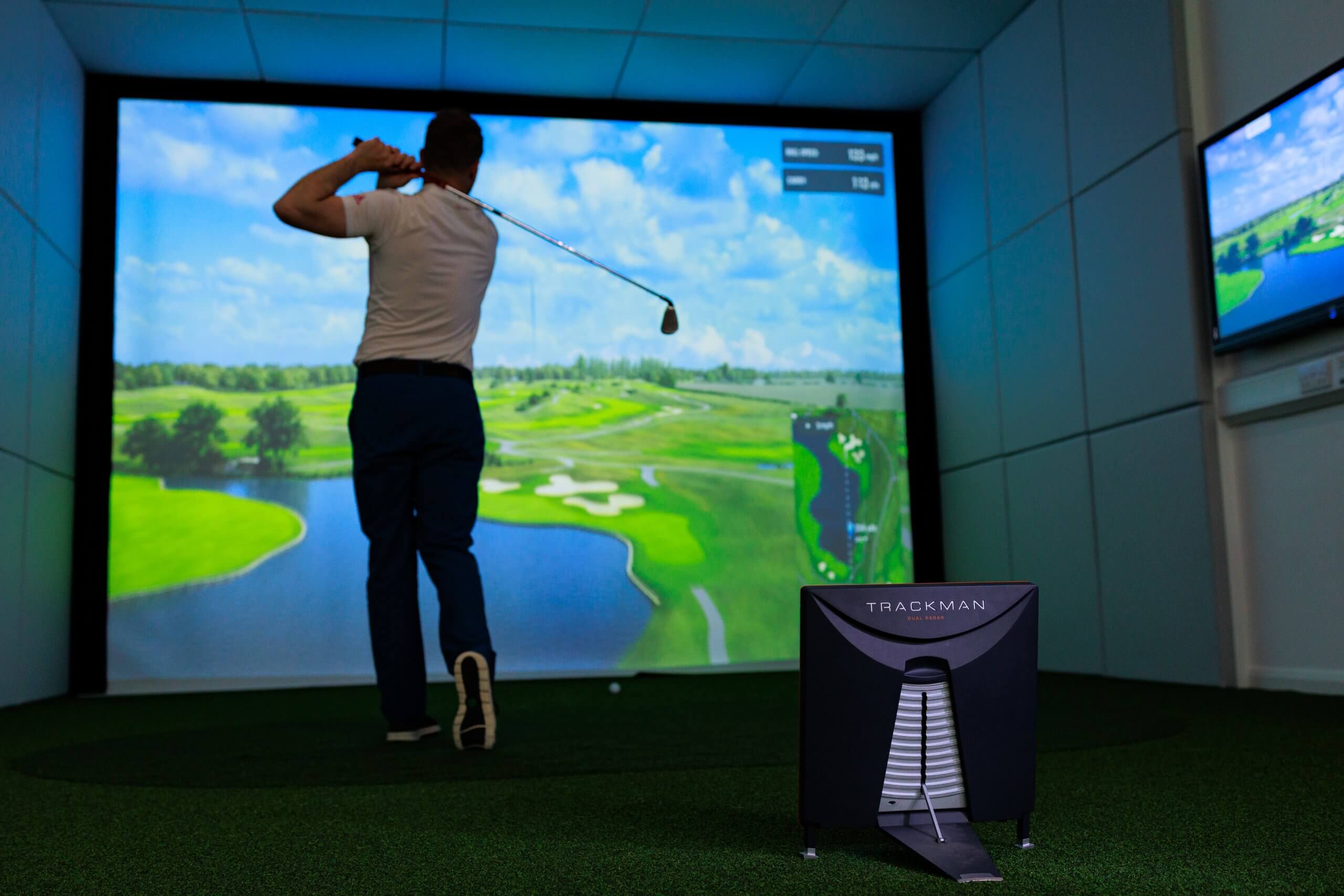
Image Source: www.golfswingsystems.co.uk
The Basics of Modern Golf Simulation
A golf simulator is more than just a screen and a projector. It is a complex system that brings the outdoor game inside. To truly grasp how these systems operate, we must look at the core golf simulator components that work together. These parts capture your swing, process the information, and display the results.
Core Components of an Indoor Golf Setup
Setting up a complete indoor golf setup requires several key pieces of hardware and software. Each part plays a vital role in recreating the full golfing experience.
- Launch Monitor: This is the heart of the system. It measures everything about the ball and club.
- Impact Screen: This heavy-duty screen takes the impact of the ball and displays the virtual course.
- Projector: This device beams the high-definition image of the course onto the screen.
- Hitting Mat: This provides a realistic surface to strike the ball from.
- Computer/Software: This powerful engine runs the golf swing analysis software and manages the virtual golf environment.
Deciphering the Launch Monitor Technology
The launch monitor for golf is the most crucial piece of equipment. It gathers the raw data about your shot. Modern simulators rely on very advanced technology to capture this data with high speed and precision. There are two main types of technology used in these devices today.
Photometric Golf Simulators: Seeing the Shot
Photometric golf simulator systems use high-speed cameras. These cameras take thousands of pictures every second.
How Photometric Systems Capture Data
- Strobe Lighting: Powerful, quick lights flash as you hit the ball. This freezes the action.
- Multiple Cameras: Several cameras view the ball and clubhead from different angles.
- Image Processing: The software tracks dots or markings on the ball and clubface in each frame.
By comparing where these dots move from one frame to the next, the system calculates important factors. These factors include ball speed, spin rate, launch angle, and club path. These systems are known for their extreme golf simulator accuracy when measuring side spin and face angle.
Radar Golf Simulators: Tracking the Flight
Radar golf simulator technology uses microwave signals, similar to Doppler radar used in weather forecasting.
How Radar Systems Work
- Signal Emission: The unit sends out radio waves toward the hitting area.
- Reflection: When the club and ball move, the waves bounce back to the unit.
- Doppler Shift: The system measures how the frequency of the returning waves has changed. This change (the Doppler shift) tells the computer the speed and direction of the ball and club.
Radar systems are excellent for tracking the ball’s full flight path outdoors. Indoors, they need enough space behind the hitting area for the ball flight to be measured before it hits the screen.
| Feature | Photometric System (Cameras) | Radar System (Microwaves) |
|---|---|---|
| Measurement Method | Captures images of club/ball movement. | Uses reflected radio waves (Doppler effect). |
| Indoor Space Needs | Less side/rear space needed. | Requires more space behind the hitting area. |
| Primary Strength | High accuracy on spin and face angle at impact. | Good at tracking full ball flight path. |
| Common Use | High-end commercial and home systems. | Portable units and outdoor setups. |
Interpreting the Data: The Role of Software
Once the launch monitor collects the numbers, that data is sent instantly to the main computer. This is where the golf swing analysis software takes over. This software is responsible for translating raw measurements into a realistic virtual experience.
Calculating the Shot Trajectory
The software uses complex physics models to predict the ball’s flight path. It takes the initial launch conditions (speed, spin, angle) and factors in atmospheric conditions programmed into the simulation, like air density and elevation (though elevation effects are less critical indoors).
This calculation process must be extremely fast. If the computer takes too long, the virtual ball will not match up with the real ball’s flight path on the screen. This synchronization is vital for believing in the virtual golf environment.
Creating the Virtual Golf Environment
The software does more than calculate ball flight. It renders the entire golf course environment. This includes:
- Detailed graphics for fairways, greens, and rough.
- Accurate physics for how the ball reacts to different surfaces (e.g., a hard bounce on cart paths vs. a soft landing on the green).
- The sound effects that match the action on screen.
The quality of the graphics and the speed of the rendering heavily influence the immersive nature of the golf simulator technology.
Installation and Setup Considerations
A successful golf simulator installation requires careful planning. You need the right space and precise alignment for the technology to work correctly.
Room Requirements and Alignment
The placement of the launch monitor is critical. If the unit is not perfectly aligned with the center of the hitting area, the measurements will be flawed, leading to poor golf simulator accuracy.
For photometric systems, the cameras must have a clear, unobstructed view of the clubhead and ball at impact. For radar systems, you need enough clear air space for the ball to fly a few feet before hitting the screen, allowing the radar to get a complete measurement before impact.
Screen and Enclosure
The impact screen must be strong enough to stop a rapidly moving golf ball without causing excessive bounce-back or noise. The projector must also be positioned correctly. It usually sits behind or slightly above the player, aimed perfectly at the screen to avoid distortion or shadows. A proper enclosure keeps the ball contained and defines the hitting area.
Advancements in Golf Simulator Technology
The field of golf simulator technology is constantly evolving. Manufacturers are always striving for greater realism and better swing feedback.
High-Speed Camera Resolution
Newer systems use incredibly high frame rates—sometimes exceeding 10,000 frames per second. This allows them to capture the minuscule movements of the clubface at the exact moment of impact. This precision is key for advanced diagnostics.
Integration of Swing Analysis
Modern simulators go beyond just showing where the ball went. They integrate deep golf swing analysis software. This software provides data points that were once only available on high-end PGA Tour trucks.
Key data points now commonly measured include:
- Clubhead speed and attack angle.
- Dynamic loft and lie at impact.
- Face-to-path relationship (a major factor in shot direction).
- Vertical and horizontal gear effect (how off-center hits affect direction and distance).
Artificial Intelligence and Machine Learning
Some cutting-edge simulators use AI. The software learns from thousands of recorded swings. It can then provide more personalized feedback. It might suggest adjustments to your swing based on what the best professional swings look like. This makes the indoor practice session much more effective.
How Accuracy is Achieved and Verified
The biggest question people have about indoor golf is: How accurate can these machines really be? Golf simulator accuracy depends heavily on the type of sensor used and its calibration.
Minimizing Error Sources
Every measurement has a potential error margin. Simulator companies work hard to shrink this margin through superior hardware and sophisticated mathematical modeling.
- Calibration: Regular calibration ensures the sensors are measuring distances and angles correctly relative to the hitting area.
- Environmental Control: While hard to control completely, minimizing external light interference is crucial, especially for photometric systems.
- Ball Quality: Sometimes, markings on the ball (like the logo or seam) can slightly affect how a camera tracks it. Some high-end systems use specialized, unmarked golf balls for testing.
Real-World Testing
The best way to verify accuracy is by comparing simulator results to shots hit outdoors under clear conditions. A good system will show very little deviation (often less than 1-2 mph in ball speed and less than 0.5 degrees in launch angle) between an indoor shot and its outdoor counterpart.
The Player Experience: From Data to Immersion
The ultimate goal of any simulator is immersion. This means minimizing the time between the real hit and the visual result.
Latency: The Enemy of Realism
Latency refers to the delay between the physical action (hitting the ball) and the visual representation on the screen. Low latency is essential. If you have to wait even half a second, the feeling of playing is broken. Fast processors and optimized software are key to reducing this delay.
Customizing the Virtual Golf Environment
Modern software allows players to choose from hundreds of famous courses. Players can also change the conditions:
- Wind strength and direction.
- Course firmness and green speed.
- Time of day and weather (sun glare, rain).
This level of customization ensures that practice translates well to the different challenges faced on actual golf courses. Whether you are setting up a friendly league or focusing on detailed golf swing analysis software drills, the environment adapts to your needs.
Portable vs. Permanent Installations
Simulator setups range from small, portable units to multi-room dedicated simulators. The technology choice often dictates the final form factor.
Portable Launch Monitors
Many modern launch monitors are small, battery-powered devices that sit next to the ball (like Trackman or Foresight Sports GCQuad). These are excellent for mobile use or supplementing a basic indoor golf setup. They can be used outdoors or indoors with the addition of an impact screen and software subscription. Their portability means they are favored by instructors who travel.
Permanent Rooms
A permanent installation involves building a dedicated room. This usually includes padded walls, custom netting, and professional installation of the projector and screen. This allows for the highest level of golf simulator accuracy and the most immersive virtual golf environment because the equipment is permanently aligned and optimized for one space.
FAQ: Common Questions About Golf Simulators
What kind of space do I need for a golf simulator?
You need adequate ceiling height, width, and depth. For safety and accurate tracking, most systems recommend a minimum ceiling height of 9 to 10 feet. The width should be at least 12 feet, and the depth should allow about 8 to 10 feet between the ball striking area and the screen.
Can I use real golf balls in a golf simulator?
Yes, most high-quality systems are designed to handle regulation golf balls. However, some specific units might recommend using lower-compression practice balls for specific reasons, especially in very confined spaces, to reduce noise or wear on the screen.
How much does a quality golf simulator cost?
Costs vary widely. A basic package using a portable launch monitor, a decent projector, and software might start around \$5,000 to \$8,000. A premium, custom-built system with top-tier golf simulator technology and professional installation can easily cost \$30,000 to \$60,000 or more.
Are golf simulators good for improving my game?
Absolutely. When using a system with robust golf swing analysis software, simulators provide instant, objective feedback on every swing. This immediate data loop allows for faster learning and correction than waiting until your next trip to the driving range.
How long does a typical golf simulator installation take?
A simple setup involving assembling a pre-packaged enclosure might take a day. A complex, custom golf simulator installation involving building out the room, running electrical wiring, and custom projector mounting can take several days to a week.