
Golf courses are rated using several methods to judge how hard they are to play and how good they are overall. The official system in the US is the USGA course rating system, which figures out the playing difficulty. Beyond this, magazines and experts use golf course ranking systems to list the “best” courses based on design and beauty.
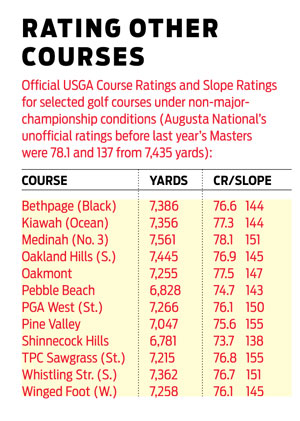
Image Source: www.popeofslope.com
The Mechanics of Golf Course Difficulty Measurement
When you see a rating on a scorecard, like “72.5,” it tells you how hard the course is for a top golfer. This isn’t just a guess. It comes from a detailed process known as golf course difficulty measurement.
The USGA Course Rating System Explained
The USGA course rating system is the gold standard for determining a course’s expected score for an expert player under normal conditions. The USGA (United States Golf Association) sets the rules for this. They look at many factors on the course.
Core Components of the Rating
The final Course Rating is calculated by adding two main scores together: the Scratch Rating and the adjusted Difficulty Factors.
Scratch Rating
The Scratch Rating is the score an expert golfer (a scratch player, meaning zero handicap) should shoot from the given set of tees. This rating is primarily based on the course’s length and how far the ball travels in the air.
Factors Affecting Difficulty
The USGA assigns specific points to various obstacles on the course. These points are added to the Scratch Rating to get the final Course Rating. This is crucial for accurate handicapping.
Here are the main factors looked at during a golf course quality assessment:
- Length: How long the holes are plays a big part. Longer holes mean more strokes.
- Altitude: Courses at high altitudes mean the air is thinner. The ball flies farther. The rating adjusts for this effect.
- Rolling Terrain (Slope): This looks at how much the fairways slope up or down. Steep slopes make shots harder to control.
- Green Speed and Contour: How fast the greens roll and how bumpy they are matters a lot. Fast, sloped greens raise the difficulty score.
- Bunker/Hazard Penalty: The number, depth, and placement of sand traps and water hazards add strokes.
- Wind Exposure: Courses open to heavy winds will have a higher rating.
- Doglegs and Obstructions: Tight doglegs or trees that block your path increase the challenge.
Golf Course Slope and Rating: Deciphering the Numbers
You often see two numbers on a scorecard: the Golf course slope and rating. They mean different things.
Course Rating: The expected score for a scratch golfer (zero handicap).
Slope Rating: This measures the relative difficulty for a bogey golfer (a player who typically shoots 20 strokes over par).
A standard 18-hole course has a maximum slope of 155. A brand-new or very easy course might have a slope of 100 (which is the baseline average). The slope rating tells you how much harder the course is for an average player compared to a great player.
For example, if a course has a rating of 71.5 and a slope of 135:
- A scratch golfer is expected to shoot close to 71 or 72.
- A high-handicap player will find the course much harder than 71.5 suggests for the scratch player. The slope of 135 shows this large gap in difficulty.
Golf Course Architectural Review: Judging the Design
Beyond just measuring difficulty, many organizations try to rank courses based on their beauty, strategy, and design. This involves a golf course architectural review. Expert writers and former players evaluate the genius behind the routing and shot-making options.
The Role of Golf Course Architect Rankings
Certain names stand out in the world of golf course design. These designers create the blueprints for memorable golf experiences. Publications often feature lists based on their influence and the quality of their work.
When judging great courses, experts look at several design principles:
- Strategy: Does the hole offer multiple ways to play it? Are the risks balanced with rewards?
- Memorability: Do you remember the look and feel of certain holes long after you leave?
- Visual Appeal: How well does the course blend with the natural land? Is the scenery top-notch?
- Fairness: Are the challenges fair, or do they rely on luck (like severe blind shots without prior knowledge)?
The process of golf course design evaluation is subjective, unlike the USGA rating, which is mostly mathematical.
Prominent Golf Course Ranking Systems
Several publications conduct annual or periodic surveys to create their lists. These lists drive travel and prestige in the golf world.
These golf course ranking systems rely on panels of raters who score courses based on set criteria. The weights given to each criterion shift slightly between different publications, leading to varied lists.
The Influence of Golf Digest Best Courses
One of the most famous examples is the Golf digest best courses list. This ranking often uses a large panel of raters—sometimes thousands of golfers—who score courses across categories like:
- Shot Values
- Course Conditioning
- Aesthetics
- Design and Architecture
- Friendliness (modern additions often include this)
Getting onto a top 100 list from a major publication signifies excellence in both maintenance and architecture.
Assessing Course Operations: Golf Course Management Standards
A great layout can be ruined by poor upkeep. Therefore, golf course management standards are a key part of a holistic assessment. This covers everything from the health of the turf to the efficiency of the clubhouse operations.
Turf Quality and Conditioning
This is perhaps the most visible element of management. Raters look closely at:
- Green Smoothness: Are there bumps or imperfections that affect the roll of the ball?
- Fairway Coverage: Is the grass healthy and evenly cut? Thin lies increase difficulty unfairly.
- Rough Definition: Is the rough penalizing but playable?
Poor management can artificially inflate a course’s difficulty rating by making the playing surface inconsistent or unfairly severe.
Operational Excellence
Beyond the grass, golf course quality assessment includes how well the facility runs:
- Pace of Play: Are staff enforcing reasonable speed limits for rounds?
- Staff Knowledge: Are marshals and starters informed about the course conditions?
- Rules Adherence: Is the course set up according to the governing body’s standards?
A facility that operates smoothly enhances the golfer’s experience, which indirectly boosts its standing in subjective rankings.
Methods for Course Evaluation
To conduct a thorough golf course design evaluation, raters use several methods to score holes and overall routing.
Hole-by-Hole Analysis
Raters walk every single hole. They play multiple shots from different lies (fairway, rough, sand). They physically measure distances and assess shot requirements.
This detailed walk-through helps determine the points assigned for hazards, elevation changes, and green complexes, directly feeding into the USGA calculation.
Comparison and Context
Experts rarely rate a course in a vacuum. They compare the course to others they have recently played, especially those designed by the same golf course architect rankings contender.
- Question to Rater: “Is this par 3 better than the famous par 3 at course X, which is by the same designer?”
This comparative analysis solidifies subjective rankings like those found in the Golf digest best courses lists.
Why Multiple Rating Systems Exist
If the USGA has a technical system, why do we still need subjective rankings?
The USGA system is designed for handicapping—ensuring fair play regardless of who plays. The ranking systems serve a different purpose: celebrating design excellence and prestige.
| System Type | Primary Goal | Key Metric | Who Cares Most? |
|---|---|---|---|
| USGA Rating | Handicap Accuracy | Points assigned to hazards and length | Daily golfers needing a fair handicap |
| Architectural Rankings | Prestige and Design Merit | Subjective scores on strategy and beauty | Enthusiasts, travelers, and course owners |
One system ensures you know your expected score; the other tells you which courses are considered masterpieces of the game. Both are vital to the industry.
Impact of Technology on Course Evaluation
Modern technology is changing how courses are assessed, especially regarding length and elevation.
Digital Mapping and Measurement
GPS tools allow raters to measure distances with extreme accuracy. This helps eliminate minor errors in the golf course difficulty measurement process. When calculating the Scratch Rating, precise yardage is necessary.
Environmental Factors Modeling
New software can simulate wind effects and ball flight based on altitude, providing more consistent data for the golf course slope and rating calculations. This moves the process toward greater scientific objectivity.
How Architects Gain Reputation
A successful architect builds a portfolio of highly-rated courses. A strong golf course architect rankings position leads to more commissions for building new courses or renovating old ones.
Consistency across different environments (coastal, desert, inland) is what separates the truly elite architects from the good ones. When an architect’s courses appear high on multiple golf course ranking systems, their stature grows significantly.
Final Thoughts on Course Assessment
Rating a golf course involves two distinct tasks. First, there is the technical calculation—the USGA course rating system—which standardizes difficulty for every player using math. Second, there is the artistic judgment—the golf course architectural review—which determines a course’s place among the best designs in the world. Both rigorous measurement and expert opinion shape how we value and experience the game of golf. Adherence to high golf course management standards ensures that the rating, whatever its type, reflects the true character of the layout.
Frequently Asked Questions (FAQ)
How often is a course rating updated?
Course ratings are generally updated annually by the governing body (like the USGA or a state association). If a course makes significant changes to the tees, hazards, or length, a re-rating survey must be commissioned immediately.
What does it mean if a course has a high slope rating?
A high slope rating (closer to 155) means the course presents significantly more challenges for a beginner or average golfer than it does for an expert golfer. The gap between the expected score of a scratch player and a bogey player is wide.
Do local golf associations use the USGA system?
Yes. Local and regional golf associations heavily rely on the USGA course rating system for official handicapping within their jurisdiction. They use the provided Course Rating and Slope Rating to calculate a player’s Course Handicap.
Are magazine rankings based on the USGA rating?
No. Magazine rankings (like Golf digest best courses) use independent panels of raters to judge design, beauty, and shot-making. They look at subjective factors that the mathematical USGA system ignores. They are separate evaluations.
Who physically rates a course for the USGA?
Trained raters, usually certified by the state or regional golf association, walk the course. They play from the designated tees, noting the exact location and severity of every hazard to determine the difficulty adjustments needed for the final rating calculation.