
What is the best way to measure for golf grips? The best way to measure for golf grips involves checking your dominant hand size and your wrist size. This two-part check helps you find the right fit for better control and less strain. Choosing the correct golf grip size is vital for good golf scores. A grip that is too small or too large can hurt your swing. This guide will help you find your perfect match.
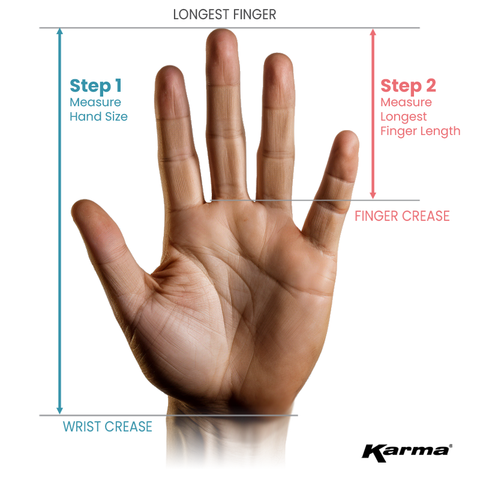
Image Source: cdn.shopify.com
Why Golf Grip Size Really Matters
Many golfers focus on clubs or balls. They forget about the grips. The grip is the only part of the club you touch. It is your main link to the club. Getting this link right is a big deal. The impact of golf grip size is huge on your swing.
A grip that is wrong can cause problems. If a grip is too small, your hands squeeze too tight. This makes your forearms tense up. Tense arms slow down your swing speed. It can also lead to hooks or slices. If a grip is too large, you might not use your fingers enough. This leads to a weak grip. A weak grip often causes pushes or weak contact. Finding the right fit helps you swing freely. It promotes a more relaxed, powerful motion.
Deciphering Golf Grip Measurements: What You Need
To get the right size, you need two main things. First, you need your hand size. Second, you need to check your wrist size. You will also need a few simple tools.
Necessary Tools for Measuring Golf Club Grips
You do not need fancy equipment. Gather these items:
- A ruler or measuring tape. A ruler is easier for small spaces.
- A pen or pencil.
- A piece of paper.
- A standard size glove you currently use (if you wear one).
These tools help in measuring golf club grips accurately at home.
Step 1: Measuring Your Hand Size
Hand size is the most common way to start determining correct golf grip size. It is simple and gives a good starting point.
How to Measure Your Lead Hand
Your lead hand is the top hand on the club during your swing. For right-handed golfers, this is the left hand. For left-handed golfers, this is the right hand.
- Get Ready: Lay your dominant hand flat on a table. Keep your fingers straight but relaxed.
- Find the Start Point: Place the end of the ruler at the very bottom crease of your palm. This crease is where your palm meets your wrist.
- Measure to the Tip: Measure straight up the middle of your palm to the tip of your longest finger (usually the middle finger). Do not include the finger pad. Measure only to where the finger joins the palm pad.
- Note the Measurement: Write this number down in inches.
Using the Golf Grip Size Chart
Once you have your hand measurement, you use a golf grip size chart. This chart links your hand length to standard grip sizes. Standard sizes are often labeled as Undersize, Standard, Midsize, and Jumbo.
Example Golf Grip Size Chart (Approximation based on Hand Length):
| Hand Length (Inches) | Recommended Grip Size | Common Label |
|---|---|---|
| Less than 7.5 inches | Undersize / .580 Core | Ladies/Junior |
| 7.5 to 8.75 inches | Standard / .600 Core | Standard |
| 8.75 to 9.5 inches | Midsize / .600 Core | Midsize |
| Greater than 9.5 inches | Jumbo / .600 Core | Oversize |
Note: These are general guidelines. Core size (like .580 or .600) also plays a role.
Step 2: Checking Your Wrist Size (The Advanced Check)
Hand length is great, but wrist size offers a more precise fit. This check helps confirm the initial size selection. It is crucial for fitting golf grips perfectly.
How to Measure Your Wrist Circumference
- Find the Wrist Bone: Locate the prominent bone on the outside of your wrist (the ulnar styloid).
- Wrap the Tape: Take your flexible measuring tape or string. Wrap it around your wrist just below that prominent bone.
- Keep it Snug but Comfortable: The tape should touch your skin but not squeeze it tightly. You should be able to slide a sheet of paper underneath it easily.
- Record the Circumference: Note the measurement in inches.
Linking Wrist Size to Grip Size
Use your wrist measurement to cross-reference your initial size choice from the hand length chart. If your hand measurement suggested a Standard grip, but your wrist is quite large, you might want to consider a Midsize or even Jumbo grip for better comfort. This comparison helps in a golf grip size comparison.
Step 3: The Glove Test (A Quick Confirmation)
If you wear golf gloves, you have a built-in reference point. This is a fast way to check if you are in the right ballpark for aftermarket golf grips sizing.
- Check Your Glove Size: Look at your current golf glove. It will have a size marked (e.g., M, L, Cadet M, etc.).
- Relate to Grip Size: Generally, glove size correlates with grip size.
- Ladies or Cadet Small gloves often fit well with Undersize grips.
- Medium (M) gloves usually pair best with Standard grips.
- Large (L) gloves often suit Midsize grips.
- Extra Large (XL) gloves might need a Jumbo grip.
This test provides a good sanity check against your ruler measurements.
Step 4: How Tape Buildup Affects Size
The way you apply tape under the grip significantly changes the final size. This is a key part of how to choose golf grips when buying aftermarket ones. Different grip manufacturers might have slightly different base sizes. Adding tape compensates for this.
Common Tape Buildup Scenarios:
| Desired Final Size | Tape Layers Needed (Standard Grip Base) |
|---|---|
| Undersize | 0 layers (Use a smaller core grip if available) |
| Standard | 1 layer |
| Midsize | 2 layers |
| Jumbo | 3 to 4 layers |
Note: Use double-sided grip tape specifically designed for this purpose. Standard electrical tape is not recommended.
The core size of the grip (e.g., .600 vs .580) is also important. A .580 core grip will feel slightly larger than a .600 core grip when taped the same way. This is an essential part of the golf grip size comparison.
Fathoming the Impact of Core Size
When looking at grips, you will often see numbers like .600 or .580. This is the core diameter of the grip when the grip is installed without any tape.
- .600 Core: This is the modern standard for most clubs.
- .580 Core: This core is slightly smaller. If you use a .580 core grip, it will feel slightly larger than a .600 core grip installed the same way.
If you are trying to achieve a specific size, selecting the right core size simplifies your taping process. For example, if you are between sizes, opting for a .600 core and adding one layer of tape might be easier than trying to shrink a .580 core grip significantly.
Practical Application: Re-gripping Your Clubs
Once you know your size, you need to apply this knowledge when measuring golf club grips for replacement.
Assessing Current Grips
Look at how you hold your current grips.
- Are your thumbs overlapping significantly? The grip might be too big.
- Are your fingers pressing hard into your palm? The grip might be too small.
- Are the lower knuckles of your lead hand barely touching the butt of the grip? This often indicates a grip that is too small.
If your current grips feel just right, measure them! You can remove an old grip, cut it open, and measure the inner diameter to see what core size you currently have. This is part of golf grip sizing tools usage—using the existing club as a reference.
Finding the Right Fit for Different Clubs
Do you need the same size grip for every club? Not necessarily.
- Driver and Woods: These clubs are swung the hardest. A slightly larger grip here can encourage a more relaxed grip pressure, which aids distance. Many golfers use a grip one size larger on their driver than on their irons.
- Irons and Wedges: Consistency is key here. Most golfers use the same size grip throughout their irons and wedges for uniform feel.
- Putters: Putter grips are a separate category. They come in various shapes and sizes (standard, midsize, “fat” style). Putter fit relates more to hand shape and stroke preference than pure length measurement. However, the thickness still impacts wrist action. Thicker putter grips reduce wrist hinge.
This customization is key to how to choose golf grips for your entire bag.
When to Consider Professional Fitting
While home measurement is a good start, professional fitting golf grips offers superior accuracy. A certified fitter has specialized golf grip sizing tools and knows how to interpret your swing data alongside your hand measurements.
Benefits of a Professional Sizing Session:
- Swing Analysis: They watch how you hold the club during a swing.
- Pressure Mapping: Some advanced fittings can show you exactly how hard you are squeezing the club.
- Lead Tape Simulation: Fitters can temporarily add wraps under the grip to let you swing with different sizes before committing to a purchase.
- Wrist Mapping: They combine hand length, wrist circumference, and glove size for a precise recommendation.
If you are struggling with consistency, or if your hands are significantly larger or smaller than average, professional fitting is highly recommended.
Common Mistakes When Sizing Golf Grips
Many amateurs make simple errors when trying to size their grips. Avoiding these pitfalls ensures a better outcome.
Mistake 1: Measuring Only the Hand Length
Relying only on the hand measurement is common, but incomplete. Wrist thickness plays a huge role. A person with long, skinny wrists might need a different size than someone with short, thick wrists, even if their hand lengths are identical. Always confirm with the glove size or wrist check.
Mistake 2: Ignoring the Effect of Tape
Golfers often buy a Midsize grip thinking it equals two wraps of tape. If they install it with zero tape, the grip will feel much smaller than expected. Always factor in the tape you plan to use when consulting the golf grip size chart.
Mistake 3: Using Too Much Grip Pressure
If you measure your hand while squeezing a tennis ball tightly, your hand size reading will be artificially small. Always measure with your hand relaxed. High grip pressure is often a symptom of an incorrect grip size, not the cause of the problem.
Mistake 4: Inconsistent Sizing Across the Bag
Using a Jumbo grip on your driver and an Undersize grip on your wedges creates an inconsistent feel. This forces your brain to adjust its motor pattern constantly. Aim for consistency across your irons and woods to build better muscle memory.
Comparing Sizing Systems
Grip sizing isn’t always standardized across brands. This is where a solid golf grip size comparison helps.
For example, a “Standard” grip from Brand A might feel slightly smaller than a “Standard” grip from Brand B. This usually comes down to the base core size (.600 vs .580) and the grip’s overall shape (e.g., some grips have a pronounced taper).
When switching brands, always refer back to your preferred tape build-up. If you liked a Brand X Standard grip that used one wrap of tape over a .600 core, aim for a Brand Y Standard grip that uses one wrap over a .600 core to get the most similar result.
Summary of the Sizing Process
To summarize, determining correct golf grip size requires a systematic approach:
- Measure your lead hand length from the wrist crease to the fingertip tip.
- Note your wrist circumference below the wrist bone.
- Check your current golf glove size.
- Use the golf grip size chart to get a preliminary size recommendation.
- Decide on the amount of tape needed to achieve the final desired size, keeping core size in mind.
- Test the feel with practice swings if possible before permanent installation.
Following these steps will greatly improve your connection to the club, leading to more solid contact and lower scores. Good grip sizing is the foundation of good golf.
Frequently Asked Questions (FAQ)
Q: Does the size of my hands affect how far I hit the ball?
A: Yes, the impact of golf grip size affects distance indirectly. If the grip is too small, you grip too tightly, which restricts clubhead speed. If it’s too big, you might lose leverage. The right size allows for maximum speed with minimum effort.
Q: Can I use regular Scotch tape instead of grip tape for my grips?
A: No. You should only use double-sided grip tape. Regular tape does not adhere properly when wet, breaks down quickly, and can cause your new grip to slip off mid-swing, which is very dangerous.
Q: What is the core size, and why does it matter for my golf grip size comparison?
A: The core size (like .600 or .580 inches) is the inner diameter of the grip when it is new. A smaller core size (.580) will feel slightly larger than a larger core size (.600) once the same amount of tape is applied, as the tape has less room to expand the inner diameter.
Q: If I wear a Cadet Medium glove, what size grip should I start with?
A: A Cadet Medium glove usually suggests you are close to the Standard size range. Start by aiming for a Standard grip size, perhaps with one layer of tape on a .600 core, and then adjust based on your hand length measurement.
Q: How often should I replace my golf grips?
A: Most experts suggest replacing grips every 40 to 60 rounds of play, or every year, whichever comes first. They lose tackiness and can harden, affecting your hold, regardless of whether they are the right size.