
A golf course is called a “links” because the term originally referred to the sandy, grassy land found along the coast, where the game of golf first developed in Scotland. These coastal areas, often barren and windswept, provided the natural terrain for playing early golf.
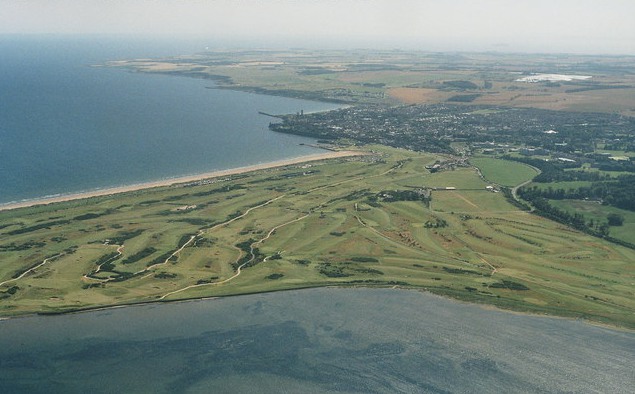
Image Source: upload.wikimedia.org
Tracing the Roots: The Birth of Links Golf
The word “links” holds a special place in the lexicon of the sport. If you visit the oldest golf courses in the world, they are almost certainly situated on this unique type of ground. To grasp why this golf course terminology stuck, we must delve into British golf history and the specific geography of where golf began.
The Geographic Definition of Links Land
What exactly is links land? It is not just any coastal area. The term derives from the Old English word hlinc, meaning a slope, ridge, or hill, often one bordering the sea.
Coastal Golf Landscape Features
Links land is defined by its environment. It is the narrow strip of land found between the arable (farmable) inland fields and the sea. This area is constantly shaped by wind and sea spray.
- Soil Composition: The ground is dominated by sandy soil golf courses. This sand drains extremely well. Rain soaks right through, meaning the ground rarely becomes muddy, even after heavy downpours. This allowed golf to be played year-round, a key factor in its endurance.
- Vegetation: The grass found here is typically hardy fescue, which thrives in salty, sandy conditions. It grows long and wispy in the rough, offering a distinct challenge compared to manicured inland grass.
- Natural Hazards: Wind is the most significant feature. There are few trees because the salt-laden gales stunt their growth. Bunkers (or “pot bunkers”) are often formed naturally by wind erosion in the sandy soil.
This natural, rugged landscape dictated how the game was played and how the courses were laid out. Early players did not need architects; they just played over the existing terrain.
Early Etymology of Links Terms
The etymology of links directly connects the word to the land itself.
The term became strongly associated with golf because the game developed organically on these stretches of coast near fishing villages and towns in Scotland.
Table 1: Key Terms and Their Links Origin
| Term | Literal Meaning in Links Context | Implication for Golf |
|---|---|---|
| Links | Borderland or seashore | The natural setting for the sport. |
| Bunker | A natural hollow or sand dune | Wind-blown depressions in the sand. |
| Fescue | Coarse, tough coastal grass | Creates the penalty areas (the rough). |
| Burn | A small stream or rivulet | Natural water hazards on the course. |
This relationship between land and game is fundamental to history of golf course design.
The Cradle of Golf: St Andrews and the Links
No discussion of links golf is complete without mentioning the St Andrews golf links, often called the “Home of Golf.” The Old Course at St Andrews is the quintessential example of links terrain.
A Natural Laboratory for Early Play
For centuries, sheep grazed the land at St Andrews. The local population played golf across this open common land. They did not build the course; they simply used the natural contours created by the sea and wind.
This casual development meant the course evolved slowly, adapting to the land rather than imposing a design upon it. This contrast sharply with modern parkland courses.
The Evolution of Course Layout
Initially, the Old Course featured 11 holes running out from the town and 11 coming back. When players needed more space, they simply extended the holes further along the links.
The large double greens, like the famous 14th/15th green, are a product of necessity on a shared piece of land. This sharing of ground is a hallmark of true links style.
Distinguishing Links from Parkland
As golf spread inland, people began building courses on traditional inland, grassy fields—the parkland style. This created a major divergence in golf course terminology.
| Feature | Links Course | Parkland Course |
|---|---|---|
| Location | Coastal, beside the sea | Inland, often near towns or parks |
| Soil/Drainage | Sandy, excellent drainage | Heavier soil, holds water more easily |
| Vegetation | Fescue grass, gorse, heather | Manicured bluegrass, manicured rough |
| Hazards | Natural wind, deep pot bunkers | Water features, strategically planted trees |
| Feel | Rugged, exposed, firm | Sheltered, lush, soft |
The fact that inland courses had to invent hazards (like planting trees) versus links courses using existing hazards (wind and dunes) solidified the unique meaning of “links.”
The Significance of Sandy Soil Golf Courses
The sandy nature of links land is perhaps the single most important factor in why these courses became the standard for early competitive play.
Year-Round Playability
Because the sandy soil golf courses drain so well, they are playable almost immediately after a heavy rainstorm. In Scotland, where winter weather is harsh, this meant golfers were not forced to stop playing for months. This continuous availability helped cement the traditions and rules of the game.
The firmness of the ground also made the ball bounce significantly, demanding a different type of shot—one that valued accuracy and control over pure distance.
Subsurface Conditions
The sand base keeps the turf firm. This firmness influences ball roll significantly. Golf played on links feels fast. The ball travels farther on the ground than through the air. This rewards clever shot-making that utilizes slopes and roll-out, a skill set distinct from modern aerial approaches.
Decoding the Origin of Golf Terms through Links
Many common terms we use today in golf course terminology owe their existence to the unique challenges presented by the links environment.
Bunkers: More Than Just Sand Traps
The word “bunker” itself is thought to derive from a geological term for a bank or mound. On links courses, these were often natural depressions or sand dunes that golfers had to play out of.
Early architects, like Old Tom Morris or Willie Park Sr., didn’t dig perfect, smooth-edged hazards. They incorporated the existing pits and hollows.
- Pot Bunkers: Small, deep, and steep-sided. These are classic links features, often punishing errant shots severely.
- Tractor Bunkers: Modern features, often larger and less natural looking, contrasting with the older style.
The Role of Heather and Gorse
While fescue grass defines the fairways, heather and gorse bushes often form impenetrable walls of vegetation just off the playing surface.
Gorse (a prickly yellow-flowered shrub) is notorious. Hitting a ball into gorse often means losing the ball entirely, or requiring a difficult, hacking recovery shot. This emphasizes the importance of keeping the ball low and straight.
Golf Course Geography and Modern Imitation
Today, many new courses worldwide aspire to emulate the links style, even if they are built far inland, sometimes hundreds of miles from the nearest sea. This is known as “links-style” golf.
Replicating the Aesthetic
Architects designing inland courses attempt to replicate the visual appeal and strategic challenge of the coast:
- Mounding: Creating artificial rolling contours that mimic dune systems.
- Bunker Placement: Strategically placing pot bunkers that look natural, even if they are dug into heavy inland soil.
- Minimal Trees: Keeping the sightlines open to simulate the wind-swept environment.
However, even the best imitation cannot fully capture the essence of true links golf because the soil and the true, unrelenting coastal wind cannot be artificially replicated.
The Rarity of True Links
True links are rare because the specific environmental conditions required—sandy soil, coastal exposure, and historic use as common grazing land—are not common elsewhere. This scarcity adds to the mystique and high value placed on playing these oldest golf courses.
Historical Context: British Golf History and Tradition
The history of golf course design is inseparable from the development of the game in Scotland. For a long time, golf was played with rudimentary equipment on uncontrolled land.
The Move to Defined Courses
As golf grew in popularity in the 18th and 19th centuries, the need for clear boundaries arose. Local groups began setting aside sections of the common land exclusively for golf. This formalization marked the transition from simple recreation to organized sport.
The earliest rules and standards were written by the links golfers themselves, often based on pragmatic solutions to problems encountered on the rugged terrain.
- If a ball was lost in the fog rolling in from the sea, a penalty was assessed.
- If a ball came to rest near an active sheep fence, the sheep’s movement dictated the next shot.
These practical solutions became the bedrock of the Rules of Golf.
Preservation of the Links Philosophy
Even as inland courses adopted sophisticated drainage systems and irrigation, the core links philosophy remained: respect the land. The goal is to use what nature provides, not to fight against it. This philosophy often means that maintenance on a traditional links course involves less intensive work than a highly manicured parkland course—primarily cutting the grass and raking the bunkers.
Fathoming the Depth of the Links Tradition
The term “links” is much more than just a regional descriptor. It carries centuries of history, unique challenges, and a specific aesthetic rooted in the rugged Scottish coastline.
The Strategic Implications of Links Golf
Playing a links course demands a different skillset compared to modern resort-style courses. The focus shifts dramatically:
- Ground Game Mastery: Learning to control the trajectory and roll of the ball is paramount. Long shots often need to be played low to avoid the wind taking them astray.
- Wind Play: Golfers must learn to aim into the wind (blow it up) or aim away from the wind (draw it back) using trajectory control.
- Bunker Escape: Since pot bunkers have steep sides, recovery often means playing sideways or backward to get out, rather than advancing directly toward the flag.
The Appeal of Authenticity
For many serious golfers, playing a true links course is a pilgrimage. It offers a connection to the game’s earliest days. The sound of the wind whistling through the fescue, the smell of the sea salt, and the firmness of the ground transport the player back to the era when golf was simply men hitting stones across the seashore. This authenticity is why the origin of golf terms remains so important to the sport’s identity.
Frequently Asked Questions (FAQ)
Q: Are all old golf courses links courses?
A: Not necessarily, but many of the very oldest golf courses are. A course is a links course only if it is built on the sandy coastal land bordering the sea. Some very old courses inland might exist, but they are not technically “links” by definition, even if they follow similar traditions.
Q: Can a course built inland still be called a links?
A: Only if the architect and club choose to use the term metaphorically, often called a “links-style” course. Strictly speaking, a true links course must be situated on coastal sandy soil golf courses.
Q: What is the difference between a “burn” and a “creek” in golf?
A: In the context of British golf history and golf course terminology, a “burn” is specifically the Scottish term for a small stream or rivulet found naturally on the links land. A creek is a more general term, often used for larger, slow-moving waterways found inland.
Q: Why are there few trees on links courses?
A: The constant, strong, salt-laden winds sweeping in from the sea prevent most trees from growing tall enough to establish themselves. The few trees that do survive are often stunted and twisted into unusual shapes.
Q: What is the most famous example of a links course besides St Andrews?
A: Royal County Down in Northern Ireland and Royal Birkdale in England are frequently cited as prime examples of world-class, traditional links golf. They embody the rugged beauty associated with this style of play.