
To get better at disc golf, you must work on several key areas: your throwing technique, your putting drills, your course management, your disc selection, and your mental game disc golf. Improving takes practice and focused effort on all these parts.
Disc golf is a sport of finesse, power, and strategy. Whether you are a beginner struggling to reach the basket or an intermediate player looking to shave strokes off your game, consistent improvement requires a systematic approach. This guide breaks down the most effective ways to boost your scores and enjoy the game more.
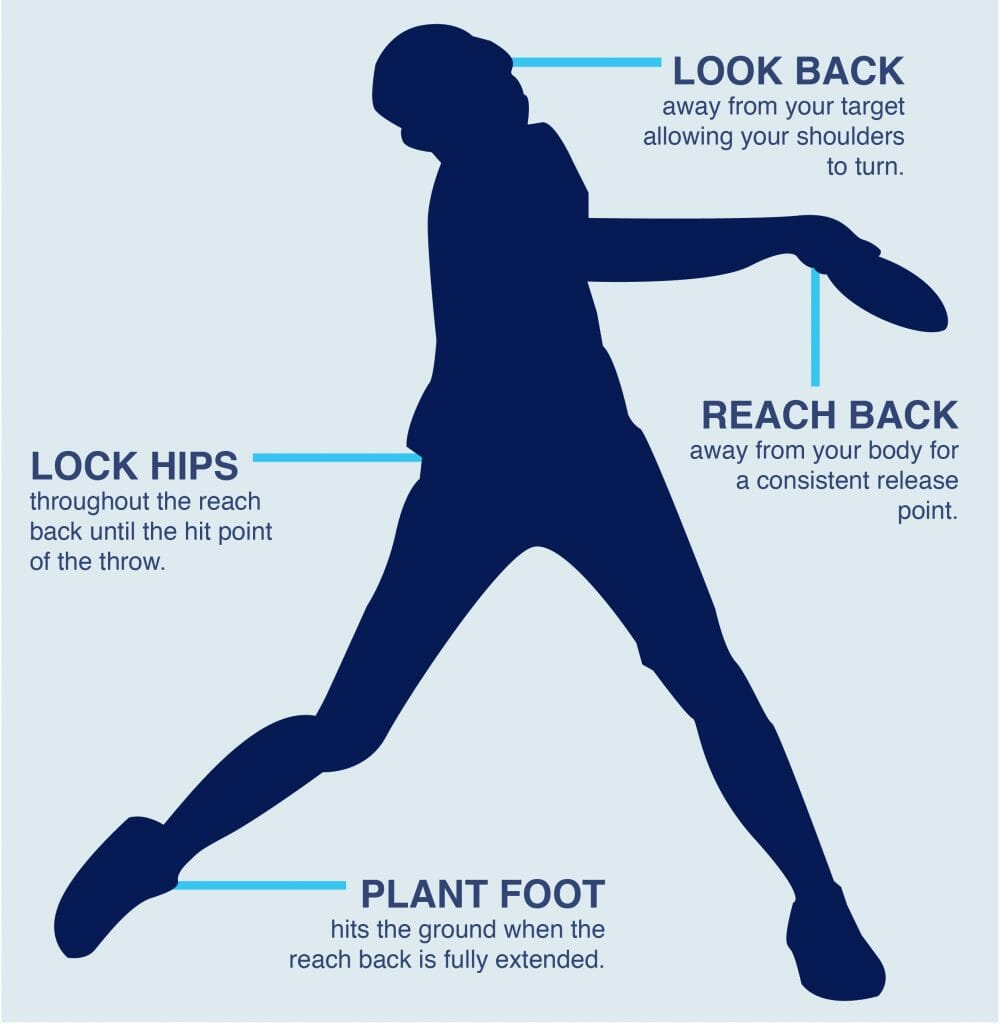
Image Source: cdn.discgolf.ultiworld.com
Building a Solid Foundation: Your Throwing Mechanics
The core of disc golf improvement lies in mastering your throw. Most players focus too much on how hard they throw and not enough on how they throw. Great distance comes from efficiency, not brute force.
Grasping the Essentials of Disc Golf Form
Your disc golf form is the blueprint for every successful shot. A good form ensures you transfer energy smoothly from your legs, through your core, and out through your fingertips. Poor form leads to inconsistency and injury.
The Power of the Stance and Lower Body Drive
Many new players forget their legs. Your legs generate most of the power.
- Wide Base: Keep your feet shoulder-width apart or slightly wider for stability.
- Weight Shift: Start with weight on your back foot. As you begin your reach back, smoothly shift your weight forward onto your front foot. This weight transfer creates whip-like action.
- Plant Foot: As your arm moves forward, plant your front foot firmly. This acts as the brace point, stopping your lower body momentum and transferring energy up your kinetic chain.
Refining Your Throwing Technique
Focus on the sequence. Think of it as a chain reaction: Legs start it, hips turn next, then your torso rotates, and finally, your arm snaps through.
- The Reach Back: Keep your reach back smooth and aligned toward your target. Do not over-rotate your shoulder backward.
- The Hit Point (Release): This is the crucial moment. You want the disc to be pulled across your chest, not pushed out in front of you. Imagine pulling a lawnmower cord very fast.
- Follow-Through: Let your arm finish high and across your body, pointing toward your target. A strong follow-through ensures you have put maximum energy into the disc.
Improving Backhand Power and Accuracy
The backhand (or sidearm/backhand drive) is the staple shot in disc golf. Getting better at improving backhand throws is essential for long drives.
Avoiding Common Backhand Mistakes
- “Rounding”: This happens when the disc path curves away from your body too early. It leaks power and causes the disc to fly wide left (for a right-hand backhand thrower). Keep the disc tight to your chest during the pull-through.
- “Chicken Winging”: Letting your elbow flare out and up early. Keep your elbow tucked near your hip until the moment of release.
- Gripping Too Hard: Tension kills speed. Grip firmly enough so the disc won’t slip, but relax your wrist and fingers until the final snap.
Drills for Backhand Consistency
- Towel Drill: Hold a small towel instead of a disc. Practice your full motion, snapping the towel forward. This teaches you proper release timing and helps you feel the “snap” without the complexity of the disc flight path.
- One-Step Drill: Start close to your target (about 50 feet). Use only the weight shift and arm motion, no long run-up. Focus purely on clean alignment and release angle.
Developing the Forehand Shot
The forehand development is vital for shots that need to curve right (for a right-hand thrower) or navigate tight doglegs.
Forehand Mechanics
The forehand is often more wrist-driven than the backhand.
- Grip: Often requires a slightly stronger, firmer grip than the backhand to maintain control.
- Brace: Because the throw is across the body, your front foot brace needs to be solid to prevent your whole body from spinning out too early.
- Elbow Position: Keep the elbow bent and tucked in initially. The power comes from snapping the forearm and flicking the wrist outward. Avoid letting the elbow rise too high during the pull.
Forehand Practice Focus
Forehands require more focused practice to prevent turnovers (the disc flipping over too easily). Practice throwing flat-topped forehands at shorter ranges (150-200 feet) until you can control the angle of the release consistently.
Mastering the Short Game: Approach and Putting
No matter how far you drive, most strokes are saved or lost within 100 feet of the basket. Dedicating time to your short game is the fastest way to lower your scores.
Crucial Approach Shots
Approach shots are those throws between your drive and your final putt—usually 40 to 150 feet away. These shots demand precision and predictability.
- Controlled Distance: Unlike drives, approach shots prioritize landing softly near the basket over raw distance.
- Disc Choice: Use midranges or slower fairway drivers. These discs slow down quicker and give you better control over landing zones.
- The Lofted Approach: For short approaches, use a high-arcing shot (like a putter or midrange thrown slightly nose-up) that fades gently onto the green. This minimizes ground play and rollaways.
Practice Routine for Approach Shots
Set up cones or markers at varying distances (50 ft, 75 ft, 100 ft). Throw 10 shots to each marker, focusing only on the landing spot, not the basket. Track how many land within a 15-foot radius of the target.
Essential Putting Drills
If you miss putts inside 20 feet, you are giving away strokes unnecessarily. Putting drills must be consistent and frequent.
The Importance of Stance and Routine
Your putting routine should be identical every single time, regardless of the pressure.
- Stance: Find a comfortable, stable stance. Some prefer straddle, others slight stagger. Stability equals consistency.
- Grip: Usually a gentle grip on the rim, ensuring the disc lays flat against your fingers for a clean release.
- Line: Pick a specific chain link or plastic band you aim for.
Structured Putting Drills
Dedicate at least 30 minutes per session solely to putting.
- The Circle Drill (Putt Routine Builder): Place five discs in a circle around the basket at 10, 15, and 20 feet. Make five putts from each spot before moving to the next distance. If you miss one, you must repeat that distance until you make all five.
- The Ladder Drill (Pressure Practice): Start at 15 feet. Make one putt. Take one step back (to 18 feet). Make two putts. Step back again (to 21 feet). Make three putts. Continue until you miss, then return to the start. This forces you to build streaks under self-imposed pressure.
Strategy and Gear: Course Management and Disc Selection
Great players don’t just throw well; they think well. Strategy and proper equipment management elevate a good player to a great one.
Developing Effective Course Management
Course management is about making smart decisions based on risk versus reward. It is the strategy layer of disc golf.
Playing Within Your Limits
The most common mistake in course management is trying to force a shot you can’t reliably make.
- The Safe Play: If the hole requires a long, tight gap shot with a water hazard on the left, aim for the center of the fairway, even if it leaves you a longer second shot. A long third shot is usually better than a lost disc and a penalty stroke.
- Know Your Limitations: If you can only reliably throw your forehand 250 feet, do not try to bomb it 350 feet on a tight fairway. Play smarter golf.
Analyzing the Hole Before Teeing Off
Before every shot, ask these questions:
- What is the ideal landing zone for my next shot?
- What is the worst-case scenario if I miss?
- Does this shot require a fade, a straight line, or a turnover?
- What disc best executes that required flight path?
Intelligent Disc Selection
Disc selection significantly impacts your score. Carrying 20 discs you rarely use wastes time and confuses your decision-making.
The Three Flight Numbers Explained
Discs are generally categorized by Speed, Glide, Turn, and Fade. For improvement, focus especially on Turn and Fade.
- Turn (Left Fade): How much the disc turns left (for RHBH throwers) early in its flight. Higher negative numbers mean more turn.
- Fade (Right Fade): How much the disc hooks right at the end of its flight. Higher positive numbers mean a harder fade.
Building a Balanced Bag
You do not need 20 drivers. Focus on three main categories of discs, ensuring you have multiple options in each type:
| Category | Purpose | Ideal Speed Range | Focus Area |
|---|---|---|---|
| Drivers | Max distance off the tee. | 11 – 14 | Needs high speed control. |
| Fairway/Control | Controlled placement and wooded shots. | 7 – 10 | Primary utility and approach disc. |
| Midranges/Putters | Accuracy inside 250 ft, reliable flight. | 1 – 6 | Focus on straight flight and soft landings. |
Tip: Carry several putters (usually 3-4). Use one for putting, one for short approach shots (where you want it to land flat), and one for windy approaches (a very stable or overstable disc).
Elevating Your Game Through Dedicated Practice
Improvement is directly proportional to the quality and consistency of your disc golf practice. Casual rounds alone will only refine what you already know.
Structuring Effective Disc Golf Practice
Stop throwing full power on the practice field until your mechanics are solid. Practice should be deliberate.
The Purposeful Field Session
When you go to an open field, do not just huck discs as far as you can. Assign goals to every throw.
- Flight Shape Drills: Throw 10 shots aiming for a specific curve (e.g., 5 hyzer flips to straight, 5 hard turnovers). Analyze why the disc flew the way it did.
- Grip Adjustment Testing: Spend 15 minutes intentionally gripping the disc differently (e.g., fan grip, power grip, modified power grip) to see how it affects release angle and distance.
Simulating Course Pressure
The real test is when the scorecard is out. Practice simulates this pressure.
- The “Pressure Putt”: After completing a round simulation, force yourself to make five straight putts from 25 feet before you are “allowed” to pack up. If you miss the third one, start the five over.
Filming and Analyzing Your Swing
Self-assessment is difficult because your actual throwing technique feels very different from how it looks. Filming yourself is essential.
- Use a smartphone to record your throws from two angles:
- Side-on View: Shows your weight shift, elbow tuck, and follow-through path.
- Head-on View (From Behind): Shows if you are “rounding” or pulling the disc on a straight line across your chest.
Compare your slow-motion video against videos of professional players executing the same shot. Look for discrepancies in timing and posture.
The Unseen Advantage: Mental Game Disc Golf
The mental game disc golf often separates average players from consistent champions. When your body tires, your mind must take over.
Managing Frustration and Negative Self-Talk
Disc golf is hard. You will throw bad shots. How you react determines the next shot.
- The “Next Shot” Mentality: Once a shot is thrown, it is history. Do not let a bad drive influence your approach. Develop a physical ritual (like cleaning your disc or taking three deep breaths) to signal the end of the previous thought and the beginning of the next one.
- Positive Affirmations: Replace negative thoughts (“I always miss this putt”) with instructional, positive ones (“Keep the elbow in, follow through high”).
Pre-Shot Routine Consistency
A strong mental game disc golf relies on a rock-solid pre-shot routine. This routine is a predictable sequence that grounds you in the present moment.
- Commitment: Fully commit to the shot you have planned (disc choice, target, power level).
- Visualization: See the disc flying exactly where you want it to go—land soft, hit the chains.
- Execution: Trust the thousands of practice throws you have put in. Do not change anything mid-swing.
Dealing with Distractions
Noise, slow groups ahead, or wind gusts are external factors. Your routine must filter these out. Focus only on the alignment between your body and the target.
Frequently Asked Questions (FAQ)
Q: How often should I practice putting?
A: You should practice putting almost every day if possible, even if only for 15 minutes. Putting is muscle memory; inconsistency breeds doubt. Short, frequent sessions are better than long, rare ones.
Q: What is the best disc for a beginner?
A: Beginners should focus on slower speed discs (Speed 5-8) with moderate glide and minimal fade. Look for baseline plastic putters and stable midranges (around Speed 4-5, Glide 4-5, Turn 0, Fade 1). These discs are more forgiving of poor throwing technique.
Q: How do I stop my drives from fading out too early?
A: Early fading (hooking left for RHBH) is usually caused by throwing with too much hyzer (outside edge tilted down) or releasing the disc nose-up. Focus on keeping the disc flat or slightly anhyzer (inside edge tilted down) at the point of release. This often requires correcting your disc golf form alignment.
Q: Should I worry about forehand shots early on?
A: Yes, developing a basic forehand is important for course management, especially for navigating right-to-left doglegs or escaping trouble. However, master the backhand first, then dedicate specific practice sessions to forehand development.
Q: What is the ideal weight of a disc?
A: Most intermediate and advanced players use discs between 168g and 175g for drivers. Beginners often benefit from slightly lighter discs (160g-167g) because they require less arm speed to generate lift.