
What is the standard golf driver length? A standard golf driver for an average adult male golfer is typically 45 inches long. However, this “standard” length is just a starting point, and the ideal driver length by height can vary significantly, affecting power, control, and overall consistency on the course.
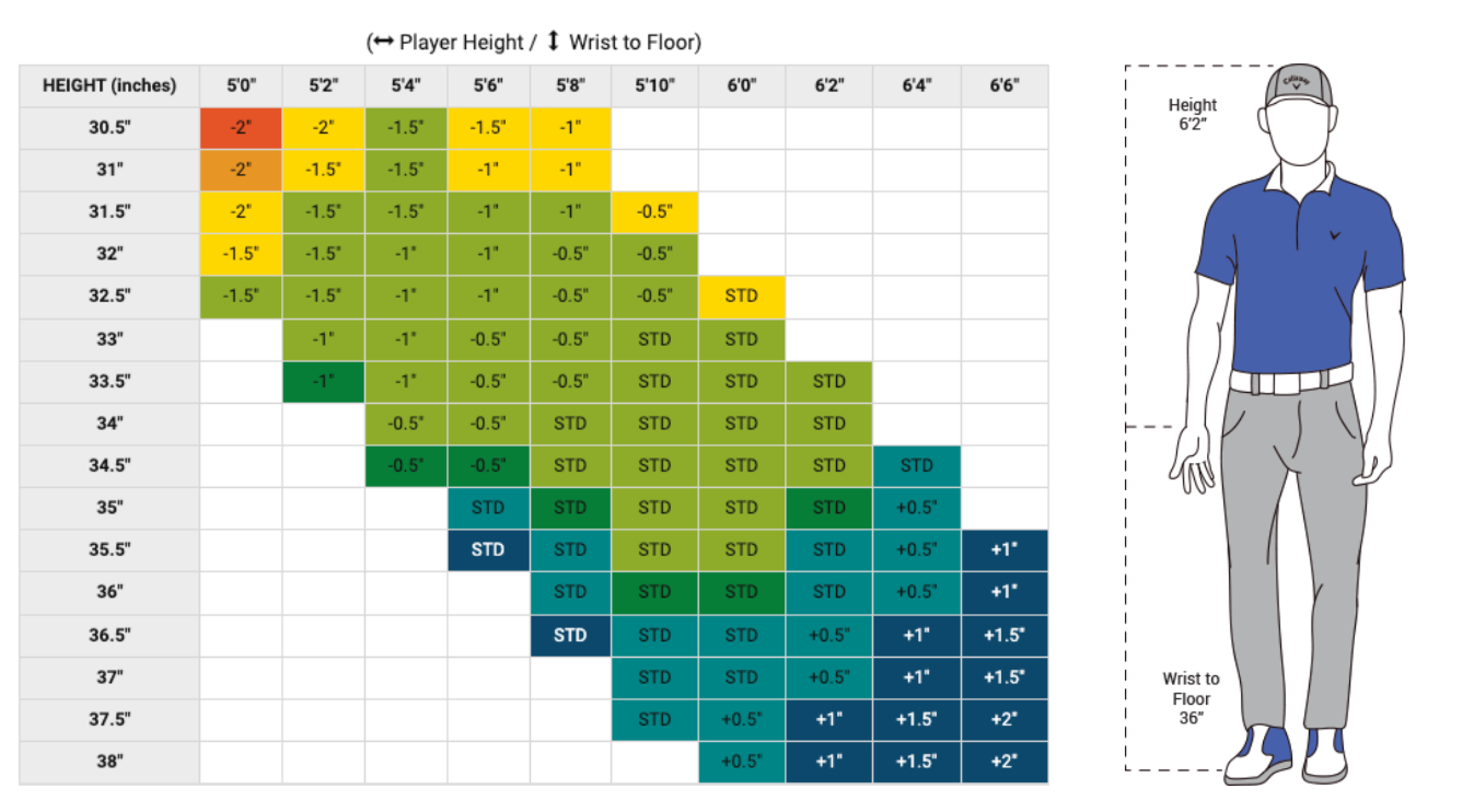
Image Source: images.contentstack.io
Deciphering the Rules: Driver Length Regulations
Golf is governed by strict rules, especially concerning equipment. These rules ensure fair play across all levels of the game, from weekend hackers to touring professionals. The length of the club is a critical factor in this regulation.
USGA Conforming Driver Length Standards
The United States Golf Association (USGA) sets the rules for equipment used in championship play. These rules dictate what clubs are legal for competition.
The USGA limits how long a club can be. This limit helps keep the game focused on player skill, not just on maximizing leverage with excessively long tools.
- The Rule: The USGA conforming driver length limit is 48 inches. No club designed to be a driver can measure longer than this from the sole’s lowest point to the top of the grip.
- Practicality vs. Rule: While 48 inches is the maximum, very few standard drivers sold today reach this length. Most production models fall well short of this ceiling.
Maximum Golf Driver Length and Its Impact
The maximum golf driver length set by the governing bodies prevents players from gaining an unfair advantage through extreme leverage. Think about it: a longer lever generally means more clubhead speed.
If clubs were unlimited in length, golfers could potentially swing them much faster. This speed might translate into disproportionately long drives, changing the nature of the game too much.
The current limit encourages a balance. Players must still generate speed through technique, not just rely on a very long shaft.
Typical Golf Driver Specs: What’s on the Shelf?
When you walk into a golf shop, you see many drivers. Most of these will share a similar, easily manageable length.
Standard Length Ranges
The industry has settled on a few key lengths for mass production. This keeps manufacturing costs down and provides a reliable starting point for most golfers.
| Golfer Profile | Typical Driver Length (Inches) | Notes |
|---|---|---|
| Average Adult Male | 45.0″ to 45.5″ | Most off-the-rack models fall here. |
| Average Adult Female | 44.0″ to 44.5″ | Shorter shafts aid in control and swing speed for many women. |
| Shorter Men/Seniors | 44.0″ to 44.5″ | Helps achieve better contact and launch angle. |
| Very Tall Players | Up to 46.0″ (Custom) | Often requires custom ordering to maintain proper fit. |
The typical golf driver specs lean toward the 45-inch mark for men. This length offers a good blend of distance potential and control for the majority of players.
Fathoming the Ideal: Matching Driver Length to Your Body
One size does not fit all in golf. Your height, arm length, and swing style all matter when choosing the right shaft. Finding the ideal driver length by height is key to hitting the sweet spot more often.
How Height Influences Driver Length
Taller people generally need longer clubs. Shorter people need shorter clubs. This is simple geometry. A longer club allows a taller person to maintain a more comfortable, powerful posture at address.
If a tall person uses a standard 45-inch driver, they might have to stoop too much. This stooping posture restricts the swing and reduces power output. Conversely, a short person swinging a 45-inch driver might feel like they are reaching for the ball, leading to inconsistent strikes off the toe or heel.
Custom Fitting vs. Off-the-Rack
This brings up the difference between standard vs custom driver length.
- Standard: A fixed length that works for the “average” golfer. It’s convenient and affordable.
- Custom: A shaft length specifically measured and cut for your body and swing dynamics. This maximizes your potential.
A professional fitting session will measure your wrist-to-floor measurement. This measurement is crucial for determining the correct shaft length.
The Science of Swing Mechanics and Length
Why does length matter so much? It affects three main things: swing speed, control, and the location of impact on the clubface.
Swing Speed and Distance Potential
Longer shafts generally create more swing speed. Imagine a longer lever on a wheelbarrow—it moves more weight with less effort. In golf, a longer shaft acts as a longer lever, potentially boosting clubhead speed.
- Pro: More speed equals more distance potential.
- Con: More speed makes the club much harder to control. Missing the center of the face becomes more common.
Forgiveness and Impact Location
Forgiveness is how well a club minimizes distance and directional loss on off-center hits. Golf driver length for forgiveness is a delicate balance.
Shorter shafts tend to be more forgiving for slower swingers or those struggling with accuracy. Why? Because a shorter shaft is easier to control, meaning the golfer is more likely to hit the center of the face consistently.
If you consistently hit the toe, a slightly longer shaft might help you reach the center. If you always hit the heel, a shorter shaft might bring the sweet spot back toward the middle of your swing arc.
Adjusting Golf Driver Length: Making Fine-Tuned Changes
Sometimes, a driver feels almost perfect but needs a small tweak. Adjusting golf driver length is a common practice in club repair.
Trimming vs. Adding Length
Shaft length is usually adjusted by trimming the butt end (the top where the grip is).
- Shortening: This is the standard procedure. A club builder removes the grip, cuts the required amount off the top of the shaft, and then installs a new grip. Shortening a shaft has a minor effect on swing weight (making the club feel slightly lighter in the head).
- Lengthening: This is trickier. You can add material to the butt end under the grip, but it significantly changes the swing weight, often making the club feel very head-heavy. For this reason, golfers rarely lengthen a driver significantly unless they are very tall.
The Impact of Small Adjustments
Changing the length by even half an inch can have a noticeable effect on feel and performance.
- 0.5-inch change: Can often be detected easily by an experienced golfer.
- 0.25-inch change: Might feel subtle but can fix minor trajectory issues for a focused player.
Driver Shaft Length Guide: Interpreting Measurements
When looking at specifications, you need to know exactly how the measurement is taken. This is standardized for accuracy.
Measuring Protocol
The official measurement method ensures that comparing driver lengths across different brands is fair.
- The Setup: Place the driver sole flat on the ground.
- The Reference Point: Find the point where the sole makes contact with the ground (this is crucial—not the bottom of the ferrule).
- The Measurement: Measure straight up along the shaft’s axis to the very end of the grip.
This precise measurement is what determines if a club adheres to the driver length regulations.
The Fine Art of Custom Fitting and Shaft Length
A professional fitting session is the best way to dial in your perfect length. They use specialized equipment to track your swing dynamics.
Analyzing Your Swing for Optimal Length
A fitter looks at more than just your height. They analyze:
- Hand Position: Where your hands naturally rest at address.
- Swing Plane: Whether you swing more upright or shallower.
- Tempo and Strength: How quickly you bring the club down and how much effort you exert.
If you have a fast, aggressive tempo, you might benefit from a slightly shorter shaft for better control, even if your height suggests a longer one. If you have a slow tempo, you might benefit from the extra length to generate more speed.
Comparing Driver Lengths: What Pros Use
Tour professionals often use shorter drivers than the legal maximum. Why? Because consistency on the PGA Tour is paramount. They prioritize hitting the fairway over gaining an extra five yards that might come with a length increase but also an increased chance of a major miss.
- Most tour pros play drivers between 44.5 and 45.25 inches.
- This preference clearly shows that shorter, more controllable shafts often win out, even for the world’s best ball strikers.
Why Standard Length Might Not Be Your Friend
The “standard” 45-inch driver is built for a golfer around 5’10” with average arm length. If you fall outside this range, the standard length works against your natural athletic movement.
Issues with a Driver That is Too Long
If your driver is too long, you are forced into one of two bad positions:
- Standing Too Far Away: This makes it hard to maintain posture and creates a “casting” motion, leading to shots that fly high with little forward momentum.
- Choking Down: If you consciously grip down on the shaft significantly (more than 1.5 inches from the end), you are effectively swinging a much shorter club than intended, losing potential speed and altering the club’s swing weight dramatically.
Issues with a Driver That is Too Short
If your driver is too short, you have to hunch over too much.
- Restricted Turn: A hunched posture limits your upper body rotation.
- Loss of Speed: You cannot use your full physical frame to generate power effectively.
- Ball Flight: You often end up hitting the ball slightly thin or topping it because your swing arc is compressed.
The Role of Shaft Material in Perceived Length
It’s important to note that shaft material affects how long a shaft feels, even if the physical measurement is the same.
- Stiffer, Heavier Shafts: Can feel shorter because they resist bending.
- Lighter, More Flexible Shafts: Can feel longer because they can whip through the zone, creating a more expansive feeling in the swing arc.
This reinforces why fittings are important: they look at the performance of the shaft, not just its physical dimension.
Conclusion: Size Truly Matters
Determining the correct driver length is one of the most significant steps toward improving your driving consistency and distance. While the driver length regulations cap the maximum at 48 inches, the optimal length for most golfers is often slightly shorter than the industry standard 45 inches.
Prioritizing a proper fit based on your body dimensions, rather than just grabbing the longest club available, ensures you maximize both distance potential and crucial forgiveness. Whether you opt for standard vs custom driver length, know that dialing in the length is the first step to better golf.
Frequently Asked Questions (FAQ) on Golf Driver Length
Q1: Can I use a driver longer than 45 inches?
Yes, you can use a driver up to 48 inches long, as this is the maximum golf driver length allowed by the USGA. However, most golfers perform better with a length closer to 45 inches or slightly less.
Q2: Does a longer driver always mean more distance?
Not necessarily. While a longer shaft can create more clubhead speed, it also makes the club much harder to control. If you cannot consistently hit the center of the face with a longer shaft, you will lose distance due to mishits. Control often beats pure length potential.
Q3: How does shaft length affect forgiveness?
Shorter shafts generally offer more forgiveness because they are easier to control, leading to more centered impacts. Longer shafts increase the potential arc, which, if your swing is inconsistent, increases the margin for error on the heel or toe.
Q4: What is the general rule for ideal driver length by height?
A very simple starting point is that golfers who are 6 feet tall or taller often benefit from shafts closer to 45.5 inches or longer, while golfers under 5’8″ might find better results with shafts around 44.5 inches or shorter. Always get professionally measured for the best results.
Q5: What is the penalty if my driver exceeds the USGA conforming driver length?
If you use a driver that exceeds the legal limit (48 inches) in a competition governed by USGA rules, the penalty is severe: disqualification for using non-conforming equipment.