
Walking a standard 18-hole golf course is typically between 3.5 and 5 miles. The actual distance covered playing 9 holes is usually half of that, or about 1.75 to 2.5 miles.
Many golfers choose to walk instead of taking a cart. Walking offers great exercise. But how much distance are you really covering? The golf course walking distance changes based on the course layout. We will break down the numbers so you know exactly what you are signing up for.
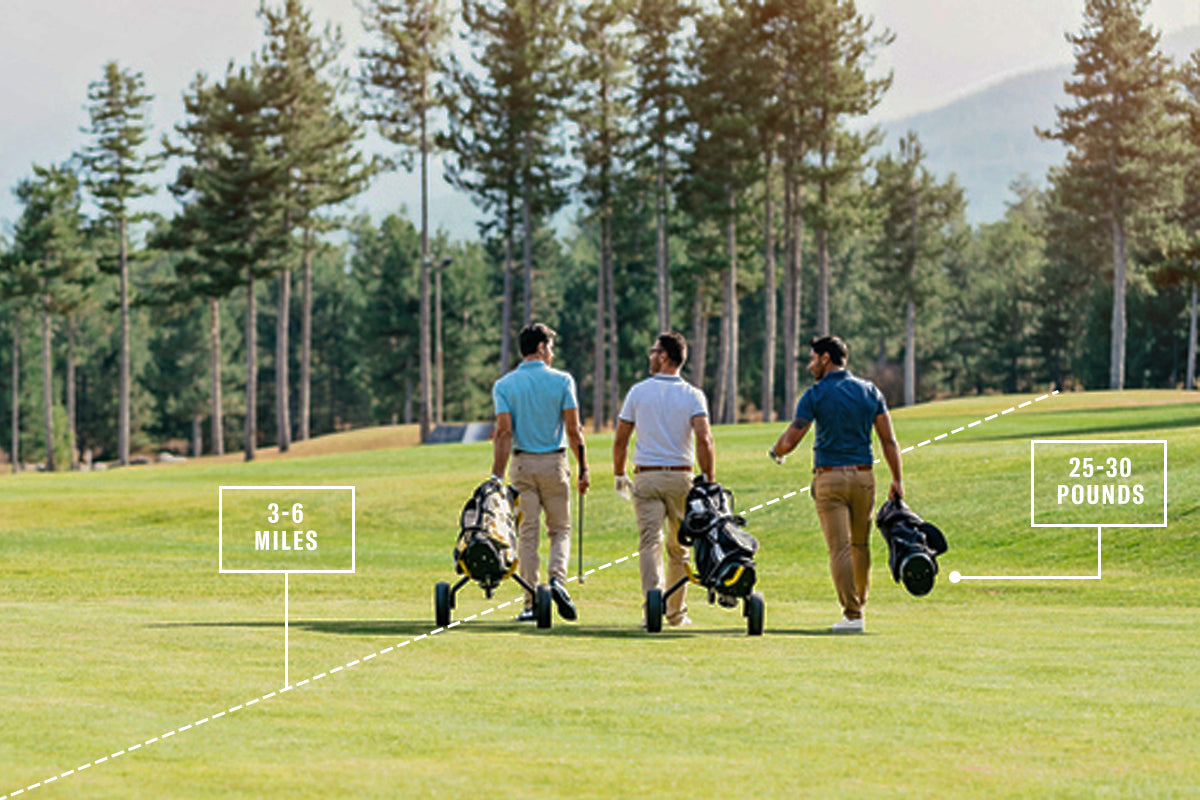
Image Source: tonal.com
Fathoming the Average Golf Course Mileage
The total length of a golf course is not set in stone. Every course designer makes different choices. This means the average golf course mileage varies a lot. We must look at the different parts of a hole to calculate the total distance.
Breaking Down the Hole Distances
A typical 18-hole course has a mix of hole types. These are Par 3s, Par 4s, and Par 5s. Each type has a standard yardage, but walking adds extra steps.
| Hole Type | Typical Yardage (Total) | Number on an 18-Hole Course (Typical) |
|---|---|---|
| Par 3 | 100 to 250 yards | 4 |
| Par 4 | 250 to 470 yards | 10 |
| Par 5 | 470 to 600+ yards | 4 |
To find the walking 18 holes distance, we look at the sum of all tee-to-green yardages.
Calculating the Total Distance
Let’s look at a medium-length course. We will use simple averages for our math.
- Par 3s (4 holes): 4 x 175 yards = 700 yards
- Par 4s (10 holes): 10 x 380 yards = 3,800 yards
- Par 5s (4 holes): 4 x 520 yards = 2,080 yards
Total typical golf course yardage from tee to green is: 700 + 3,800 + 2,080 = 6,580 yards.
Since there are 1,760 yards in one mile, we convert this:
6,580 yards / 1,760 yards per mile ≈ 3.74 miles.
This is the shortest distance if you walk straight from the center of one tee box to the center of the next green. Realistically, players wander a bit more. This brings the true distance closer to 4 miles.
Interpreting Distance Covered Playing 9 Holes
If 18 holes is about 4 miles, then distance covered playing 9 holes is generally around 2 miles. This is a good walk for a morning or afternoon.
However, course layout matters greatly for 9 holes.
- Looping Layout: Many courses are designed so the back 9 brings you close to the clubhouse. If you play 9 holes and finish, your distance is accurate.
- Straight Out and Back: Some courses send you far out and then have you return the same way. This is less common but possible.
For a standard 9-hole round, expect to walk about 2 miles of terrain. This is still a solid workout.
Deciphering the Cart Path Length Versus Walking
When you look at a course, you often see cart paths weaving around. How long is the golf cart path length compared to the walking route?
Cart paths are made to be smooth and often take longer routes. They must accommodate the golf cart’s turning radius and avoid steep slopes that carts might struggle with.
Why Paths are Longer
- Avoiding Hazards: Paths detour around water hazards, thick woods, and out-of-bounds areas.
- Gentle Slopes: Carts cannot handle very steep hills well. Paths take longer, gentler routes up or down elevation changes.
- Access Points: Paths must connect all tee boxes, greens, and sometimes specific yardage markers.
If the straight walking route is 4 miles, the cart path could easily add another half mile or more. Golfers who ride carts often cover more distance in total travel time, but they cover less actual physical ground on foot.
Walking vs driving golf course comes down to fitness goals. Walking is better exercise. Driving saves energy for the swing.
How Far Is a Par 5 Walk?
A Par 5 hole is the longest challenge on the course. How far do you walk during one of these holes?
A standard Par 5 ranges from 470 yards to over 600 yards for men. For women, it might start around 400 yards.
Let’s take a common middle ground: a 500-yard Par 5.
- Tee Shot: You hit the ball 200 yards. You walk 200 yards to your second shot.
- Second Shot: You hit the ball another 250 yards. You walk 250 yards to your third shot.
- Approach and Green: The remaining 50 yards to the hole, plus walking around the green to line up your putt. Let’s estimate 75 yards total.
Total distance walked for one 500-yard Par 5 is roughly 200 + 250 + 75 = 525 yards.
You walk almost the entire yardage of the hole, plus the distance you walk finding your ball and walking on the green.
Analyzing Golf Course Perimeter Size
When people ask about the distance of a golf course, sometimes they mean the boundary or the golf course perimeter size. This is a very different measurement.
The perimeter is the total length of the outside boundary of the entire property.
- Small, Tight Courses: A very small, executive course might fit on 50 acres. Its perimeter could be relatively short, perhaps 1 to 1.5 miles around the edge.
- Large, Championship Courses: A sprawling championship course covering 150 to 200 acres will have a much larger perimeter. This could easily exceed 2 or 3 miles just to walk the outside edge.
It is important to note that the perimeter distance does not relate to how far you walk while playing 18 holes. The playing distance weaves back and forth across the property.
The Hidden Miles: Steps and Extras
The yardage calculated above is only the travel between shots. The actual steps taken are much higher when you factor in activity around the ball.
Steps Per Round
A typical mile equals about 2,000 steps for most adults. If you walk 4 miles in 18 holes:
4 miles x 2,000 steps/mile = 8,000 steps.
However, this is too low. Why? Because you don’t walk in a perfectly straight line between shots.
- Searching for Balls: You walk extra loops looking for errant shots.
- Green Navigation: You walk around the green multiple times while putting, reading lines, and marking balls.
- Tee Box Movement: Walking from the main tee box area to where your group is ready.
Most studies show that walking 18 holes results in between 10,000 and 14,000 steps. This confirms walking the course is a substantial physical activity.
Comparing Walking vs Driving Golf Course
The difference in effort is vast when comparing walking vs driving golf course.
| Activity | Primary Benefit | Calories Burned (Estimate for 18 Holes) | Steps Taken (Estimate) |
|---|---|---|---|
| Walking | Cardio & Exercise | 900 – 1,500 calories | 10,000 – 14,000 |
| Riding (Driving) | Energy Conservation | 400 – 600 calories (Minimal effort) | 3,000 – 5,000 (Mostly between the ball and the cart) |
Riding saves your legs but cuts the exercise benefits significantly.
Golf Course Walking Exercise Benefits
The decision to walk is often driven by the desire for exercise. The golf course walking exercise benefits are significant and well-documented.
Cardiovascular Health
Walking 4 to 5 miles at a brisk pace elevates your heart rate. This is excellent low-impact cardio. It helps strengthen your heart and lungs without the pounding associated with running. It is especially good for older players or those with joint issues.
Calorie Expenditure
As seen in the table, the extra effort burns hundreds of extra calories compared to riding. Over a season, choosing to walk regularly can aid in weight management.
Mental Well-being
Being out in nature, away from screens and traffic, is great for mental clarity. The gentle rhythm of walking helps reduce stress. Many golfers find their focus sharpens when they walk because they are fully engaged in the environment.
Muscle Toning
Walking, especially across uneven terrain and uphill slopes common on a golf course, works your lower body muscles: hamstrings, quads, and calves. Carrying a light stand bag adds further resistance training to your shoulders and back.
Factors That Affect Your Total Mileage
While 4 miles is a good baseline, several things can push your total mileage higher or lower.
1. Course Slope and Terrain
Hilly courses make you walk further in terms of vertical distance. Even if the flat yardage is 4 miles, climbing hills means your legs work harder, and you might take less direct routes to avoid very steep sections.
2. Pin Positions
When the pin is tucked behind a bunker or near the back edge of a large green, you walk further on the green itself. If the flag is in the front center, you cover less green real estate.
3. Shot Accuracy
This is the biggest variable.
- Straight Shooter: If every drive and approach lands in the fairway, you stick close to the shortest route.
- Wild Hitter: If you are constantly hitting into the woods, water hazards, or deep rough, you will walk many extra yards backtracking or searching for your ball. A round of poor accuracy can easily add an extra mile to your total.
4. Caddie vs. Pull Cart vs. Carry Bag
How you carry your gear affects fatigue, but not always the exact distance:
- Carry Bag: Most demanding physically. You walk the course distance plus the weight of the bag.
- Pull/Push Cart: Easier on the back and shoulders than carrying. The distance remains the same.
- Golf Cart: Eliminates walking, covering the golf cart path length via motorized travel.
Practical Tips for Maximizing Your Walk
If you plan to walk your rounds, a little preparation goes a long way.
Choose the Right Gear
Your shoes and bag matter immensely for comfort over 4+ miles.
- Wear comfortable athletic shoes, not stiff leather golf shoes. Spikeless golf shoes often provide the best blend of grip and walking comfort.
- If you carry, ensure your bag has a good harness system to distribute weight evenly.
Plan Your Route
If you are playing a new course, look at a course map online beforehand. Note where the nines start and finish. Knowing the layout helps you anticipate the next hole.
Pace of Play
Walking keeps play moving faster than riding, generally. Try to walk briskly between shots. Remember the 10,000+ steps goal motivates a quicker pace.
Frequently Asked Questions (FAQ) About Golf Course Distance
How many miles is walking 18 holes at a championship course?
Championship courses are often longer, with typical golf course yardage exceeding 7,000 yards. For these longer tracks, the walking 18 holes distance can easily reach 5 to 5.5 miles.
Does playing from the forward tees change the walking distance?
Yes, slightly. Playing from forward tees means shorter tee shots and approach shots. This lowers the golf course walking distance slightly, perhaps by half a mile compared to playing from the back tees.
Is walking 18 holes good exercise?
Yes, absolutely. It provides significant cardiovascular benefits and burns a high number of calories, often matching a good aerobic workout when compared to walking vs driving golf course.
How long does it take to walk 18 holes?
Pace is key. If you walk briskly and keep up with the group ahead, 18 holes usually takes between 4 to 4.5 hours. This time includes the actual walking, plus time spent on each shot and putting.
What is the shortest possible golf course distance to walk?
If you play a very short executive or par-3 course, 18 holes might only be 2,500 to 3,000 yards total. In this rare case, the distance would be only about 1.5 miles.