
Can you practice golf at home? Yes, you absolutely can practice golf at home! Many effective drills and setups allow golfers of all levels to improve their game without visiting the course or a driving range.
Practicing golf at home is a smart way to build skills. You save time and money. You can work on your game every day. This guide shows you how to set up your home practice space. We will cover everything from putting to full swings.
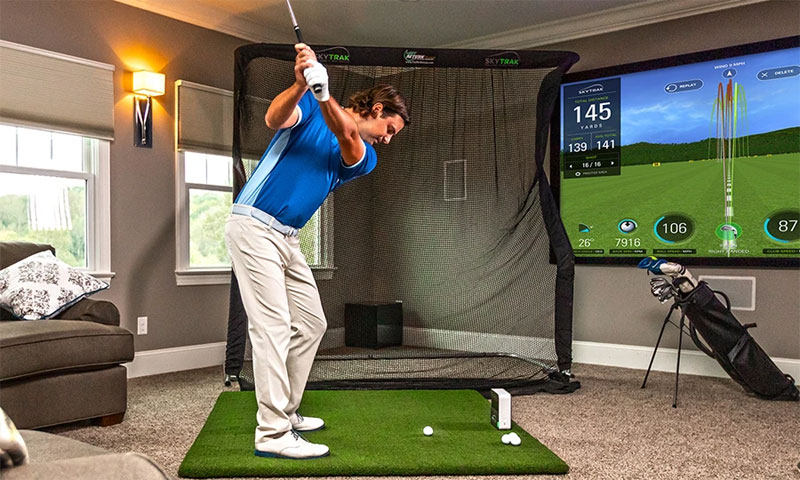
Image Source: www.golfbox.com.au
Why Home Golf Practice Matters
Consistent practice builds better golf skills. The best players practice often. Home practice removes hurdles like travel time and weather.
- Consistency is Key: Short, frequent practice beats long, rare sessions.
- Focus on Weaknesses: At home, you control what you work on. Target the parts of your game that need help most.
- Build Muscle Memory: Repetition, done correctly, builds good habits fast.
Setting Up Your Home Practice Zone
You do not need a huge space. You need a small, safe area. Think about the different parts of golf: putting, chipping, and the full swing.
The Essentials for Home Putting Practice
Putting is crucial. Most shots happen on the green. You can get great at putting inside your house.
Space Requirements
You need a clear, flat space. A hallway works well. The living room rug might also be fine. Make sure you have enough room for a 5 to 10-foot putt.
Essential Gear
- A Quality Putter: Use the putter you play with.
- Practice Balls: Use real golf balls or specialized putting balls. Foam balls work well if you have low ceilings.
- Putting Mat: A good mat rolls true. Look for mats that mimic green speed. Some mats have built-in gates or targets.
Simple Indoor Golf Drills for Putting
These drills help your stroke path and distance control.
1. The Gate Drill:
Place two tees slightly wider than your putter head. Swing your putter through the tees without hitting them. This keeps your path straight.
2. Lag Putting Practice:
Mark a spot 30 feet away (if possible, use a yardstick). Practice getting the ball within a three-foot circle of the hole. This builds distance feel.
3. One-Handed Practice:
Hold the putter with just your dominant hand. This forces your shoulders and core to control the stroke, not your weak wrist action.
Table 1: Putting Practice Drill Summary
| Drill Name | Focus Area | Required Space | Key Benefit |
|---|---|---|---|
| Gate Drill | Path Control | Small (3-4 feet) | Straight takeaway and follow-through. |
| Lag Practice | Distance Control | Medium (10+ feet) | Feeling speed for long putts. |
| One-Handed | Wrist Stability | Small | Eliminates unwanted wrist movement. |
Improving Your Short Game: Golf Chipping Practice Indoors
Chipping around the house requires more space and safety measures.
Safety First for Indoors
If you hit a real golf ball inside, you risk breaking things. Always use soft practice balls or foam balls for indoor chipping.
The Right Tools for Golf Chipping Practice Indoors
A golf chipping net is vital. Look for a net with multiple targets. Some nets fold up easily, making storage simple.
Drill Setup:
- Establish a “Rough” Area: Use a thick bathmat or a small, low-pile rug. This simulates hitting from slightly longer grass.
- The Target Zone: Set the net 5 to 15 feet away from your hitting spot.
Effective Chipping Drills:
- The Clock Drill: Set targets around your hitting area like numbers on a clock face (12, 3, 6, 9). Practice hitting one ball to each “number.” This improves trajectory control.
- Stance Drill: Practice chipping with only your front foot down (the trailing foot is slightly lifted or lightly touching the ground). This forces weight forward, which is essential for solid chips.
Mastering the Full Swing at Home
The full swing needs the most space and the best safety setup.
Creating Your Backyard Golf Practice Setup
If you have a backyard, use it! Even a small patch of grass is better than indoors for full swings.
Essential Backyard Gear
- Hitting Mat: Even on grass, a hitting mat saves your turf and gives you a consistent lie.
- Practice Net or Barrier: A high-quality net catches the ball reliably. If a net is too costly, use a solid fence or large tarp setup, but never hit toward windows or cars.
- Alignment Sticks: These are cheap and essential for checking your feet and club face direction.
Full Swing Drills for Consistency
When hitting balls at home, you often hit dozens of the same shot. Use this time for precision, not just distance.
1. Tempo Drills:
Use a metronome app. Set a tempo, like 3:1 (three counts backswing, one count downswing). Focus only on matching this rhythm, regardless of the ball flight at first.
2. Balance Drill:
After every swing, hold your finish position until the ball lands. You must be perfectly balanced. If you sway or fall forward, your balance needs work.
Using Technology for Golf Swing Analysis at Home
Modern technology makes golf swing analysis at home easy and accurate. You no longer need expensive launch monitors for basic feedback.
Smartphone Video Analysis
Your phone is your best friend for swing checks.
Tips for Effective Video Recording:
- Slow Motion: Always record in slow motion (240 fps if available).
- Camera Angles: Record from two main spots:
- Down the Line: Camera placed behind you, aimed along the target line. This checks swing plane.
- Face On: Camera placed directly in front of you, aimed at your chest. This checks head position and width of the swing.
- Compare and Contrast: Record a pro golfer’s swing (from a reliable source) and overlay it with yours in a video editing app. Look for differences in posture or wrist positions.
Utilizing Launch Monitors and Sensors
If you invest in technology, sensors provide immediate data.
- Portable Launch Monitors: Devices like Skytrak or Garmin R10 give you club speed, ball speed, and launch angles, even indoors (when paired with a screen).
- Swing Sensors: Smaller devices clip onto your glove or shaft. They measure things like tempo, swing path, and face angle. This data is great for targeted improvement.
Specialized Training Aids for Home Practice
Golf training aids for home cover every aspect of the game. Choosing the right tool matters more than buying many tools.
Aids for Swing Path and Face Control
These tools train your body how to deliver the club correctly.
- Alignment Sticks: As mentioned, use these under the ball and pointing at your target. Check that your feet align parallel to the sticks.
- Impact Bags: Hitting a padded bag helps you practice solid contact and stopping the hands from flipping through impact. It is a safe indoor tool.
- Alignment Gates: Simple tools that force a correct swing path around the ball.
Aids for Distance and Speed
If you want to hit it farther, you must increase club speed safely.
- Weighted Sticks (or Heavy Clubs): Swinging a weighted club (often 2x the normal weight) trains your muscles to move faster. Use it for warm-ups only.
- SuperSpeed Golf Sticks: These use velocity-based training (VBT). You swing three different weighted sticks, focusing on speed, to train your nervous system for faster movement.
Aids for Posture and Connection
Many amateur golfers swing with disconnected arms or poor posture.
- Connection Straps: These straps hold your forearms together. If you use them, you must keep your arms and body connected. If your arms separate, the strap pulls uncomfortably.
- Posture Sticks: Hold one stick vertically against your back and one angled from your belt buckle toward the ball. This maintains the proper spine angle throughout the swing.
Building Your At-Home Golf Fitness Routine
Golf is athletic. Strength and flexibility prevent injury and increase power. A dedicated at-home golf fitness routine is non-negotiable for long-term improvement.
Core Strength for Stability
The golf swing rotates around a stable center. A strong core stops unwanted lateral movement (sway) and helps control the low point of the swing.
Core Exercises:
- Planks (Front and Side)
- Russian Twists (use a light weight or water bottle)
- Bird-Dog
Rotational Power Training
Power in golf comes from transferring energy from the ground up through rotation.
- Medicine Ball Throws: If you have a soft medicine ball, stand sideways to a sturdy wall. Mimic the swing motion, throwing the ball against the wall. This trains explosive rotation.
- Cable or Band Rotations: Anchor a resistance band low. Hold the handle and pull across your body, simulating the transition from backswing to downswing. Control the movement slowly on the way back.
Flexibility and Mobility
Tight hips and shoulders restrict your turn, leading to loss of power or poor compensations.
Key Mobility Drills:
- Hip Flexor Stretches: Kneeling lunge stretches are great for opening the hips.
- Thoracic Spine Rotations: Lying on your side with knees bent, open your top arm like a book, rotating your upper back. This is crucial for a full shoulder turn.
Table 2: Sample Weekly Golf Fitness Focus
| Day | Focus Area | Key Activities | Duration |
|---|---|---|---|
| Monday | Strength & Power | Weighted Swings, Med Ball Throws | 30 min |
| Tuesday | Active Recovery | Light Stretching, Walking | 20 min |
| Wednesday | Core Stability | Planks, Russian Twists | 25 min |
| Thursday | Flexibility/Mobility | Hip & Thoracic Stretches | 25 min |
| Friday | Speed Training | Velocity Sticks (VBT) | 15 min |
| Saturday/Sunday | Rest or Course Play | Focus on feel, not drills | N/A |
Advanced Home Practice: Integrating Virtual Golf Simulator Setup
For those serious about home practice year-round, a virtual golf simulator setup is the ultimate tool. While this requires a significant investment, it offers unparalleled practice benefits.
Components of a Home Simulator
- Launch Monitor: The core piece. It measures ball speed, launch angle, spin rate, etc.
- Impact Screen/Hitting Area: A durable screen that safely catches high-speed shots.
- Software: Programs like GSPro, E6 Connect, or TGC 2019 turn the data into a virtual round on a course.
- PC/Tablet: To run the software.
Benefits Beyond Just Hitting
A simulator lets you practice specific scenarios under pressure.
- Course Management: Play 9 holes under simulated tournament conditions.
- Pressure Puttering: Use the simulator’s pressure putter drill mode.
- Shot Shaping Practice: While you still need to practice the physical motion, the software tells you why the ball curved left or right based on the numbers it received.
Making the Most of Your Simulator Data
Do not just look at your score. Analyze the numbers.
- Spin Rate: Is your driver spin too high (ballooning) or too low (low penetrating flight)?
- Vertical Launch Angle: Is your 7-iron launching too high or too low for your desired distance?
Use the data from the simulator to adjust your technique during dedicated indoor golf drills.
Structured Practice vs. Casual Hitting
It is easy to spend an hour hitting balls mindlessly at home. This provides minimal benefit. Structure your practice like a lesson plan.
The 60-Minute Focused Home Session
A focused session should break down into specific blocks:
| Time Allotment | Activity Focus | Gear Used | Goal |
|---|---|---|---|
| 5 min | Dynamic Warm-up | None | Elevate heart rate, mobilize joints. |
| 10 min | Golf Strength and Conditioning Exercises (Light) | Resistance Bands | Engage core and major rotation muscles. |
| 15 min | Putting Warm-up | Mat, Gate Drill | Achieve 10 straight, solid putts in a row. |
| 20 min | Full Swing Focus | Net, Alignment Sticks | Work only on one swing thought (e.g., tempo). |
| 10 min | Chipping Review | Chipping Net | Hit 10 chips landing within a small zone. |
This structure ensures you address all parts of the game, not just the driver.
Fathoming Swing Flaws at Home
Home practice is perfect for fixing specific swing flaws because there is no score pressure.
Fixing the Slice (Outside-In Path)
The slice comes from an out-to-in swing path.
- Alignment Check: Use two alignment sticks. One points where you want the ball to start. The other points where your feet are aligned. Ensure the foot line is parallel to the ball line.
- Inside Drill: Place a headcover or a rolled-up towel slightly outside the ball (in line with the target stick). Try to swing inside that obstacle on the downswing. This forces an in-to-out path correction.
Correcting Poor Contact (Thin/Fat Shots)
This is usually related to the low point of the swing being misplaced.
- The Tee Drill: Place one tee right in front of where your ball sits, and one tee right behind it. Your goal is to hit the ball cleanly, taking only a tiny divot after the ball (between the tees). This teaches precise turf interaction.
- Weight Transfer Focus: Feel your weight shift completely to your lead side before impact. Hesitation causes you to hang back, leading to heavy fat shots.
Maintaining Motivation and Tracking Progress
Practicing alone can be tedious. You need ways to stay motivated and see improvement.
Keeping a Practice Log
Just like tracking rounds on the course, track your time at home. A simple notebook works well.
Log Entries Should Include:
- Date and Time Spent
- Main Focus (e.g., “Tempo with the 7-iron”)
- Drills Used
- Success Metric (e.g., “Hit 6 out of 10 shots solid.”)
- Notes for Next Time (e.g., “Need to focus more on keeping the left arm straight.”)
Setting Measurable Goals
Avoid vague goals like “Get better.” Set specific, measurable home goals.
- “I will make 20 consecutive putts from 6 feet by the end of the week.”
- “I will successfully hold my finish for 5 seconds on 8 out of 10 full swings today.”
These small wins translate directly to confidence when you step onto the course.
Frequently Asked Questions (FAQ)
Q: Do I need a full golf simulator to practice effectively indoors?
A: No. Many fundamental skills like putting, chipping, and slow-motion swing work can be done effectively with just a small mat, a chipping net, and your smartphone camera. A full simulator is a major upgrade for practicing full-flight shots indoors.
Q: How often should I do my at-home golf fitness routine?
A: Aim for 3 to 4 sessions per week. Golf requires rotational power and flexibility. Dedicate at least two of those sessions specifically to golf strength and conditioning exercises that focus on rotation and core stability.
Q: What is the best way to practice distance control with wedges at home?
A: Since you cannot track real distance, practice “swing length.” For a 50-yard shot, use a 75% length backswing. For a 75-yard shot, use a 90% backswing. Use alignment sticks to ensure your backswing length matches your target distance, focusing on a smooth tempo rather than brute force.
Q: Are foam balls good for practicing my full swing indoors?
A: Foam balls are excellent for rhythm and swing path checks because they fly slowly and safely. However, they provide zero feedback on club face angle or ground contact quality (no divot). For best results, use foam balls for slow-motion work and use a net with real or high-quality plastic practice balls if you are swinging at full speed.
Q: How can I check my swing plane without expensive launch monitors?
A: Use the “Down the Line” video recording technique. Place your phone directly behind you, aiming down your intended target line. Your club shaft should appear to match or parallel your forearm line at the top of the backswing and on the downswing plane. If it looks too far inside or outside your hands, your plane needs adjustment.