
Golf cart lithium batteries typically last between 8 to 15 years. This is a significant improvement over older battery types. Lithium Iron Phosphate (LiFePO4) technology powers these modern batteries. They offer many benefits for your electric golf cart. This guide will help you learn all about their long life and how to keep them running well.
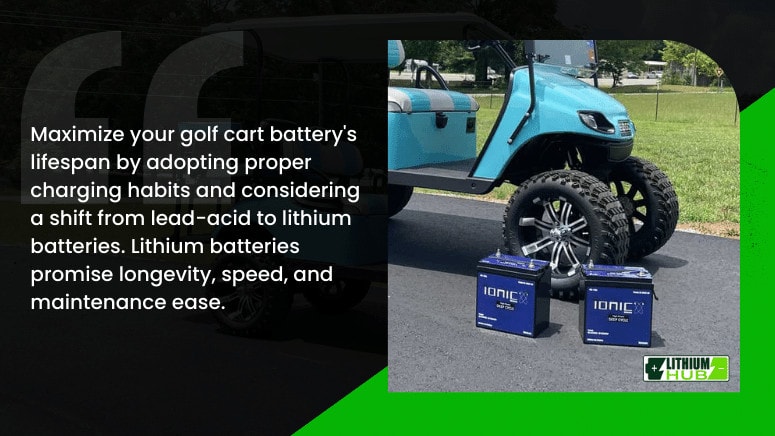
Image Source: lithiumhub.com
Deciphering Golf Cart Battery Lifespan Expectations
The expected service life of a golf cart lithium battery is much longer than other types. Most manufacturers provide a warranty backing up these claims. Knowing the key metrics helps set realistic expectations for your investment.
Key Metrics for Battery Longevity
When discussing how long batteries last, we look at cycle life and calendar life.
Cycle Life: This is the number of full charge and discharge cycles the battery can handle before its capacity drops significantly (usually to 70-80% of the original rating). Golf cart lithium batteries boast impressive cycle counts.
Calendar Life: This refers to how long the battery lasts based on time alone, regardless of usage. Even if you rarely use your cart, the battery ages naturally.
| Battery Type | Typical Cycle Life (Deep Cycles) | Typical Calendar Life (Years) |
|---|---|---|
| Lithium Iron Phosphate (LiFePO4) | 3,000 to 5,000+ | 8 to 15+ |
| Flooded Lead-Acid (FLA) | 500 to 1,200 | 3 to 5 |
| AGM Lead-Acid | 800 to 1,500 | 4 to 6 |
This table clearly shows the advantage of lithium vs lead acid golf cart batteries regarding overall longevity.
Why Lithium Batteries Outperform Older Types
Lithium technology offers inherent advantages that lead to a superior golf cart battery lifespan. These differences are vital when choosing a replacement or new battery.
Consistent Performance
Lithium batteries keep their voltage steady throughout the discharge cycle. Lead-acid batteries see a steady drop in voltage as they drain. This means your cart runs faster for longer with lithium.
Deeper Discharge Capability
You can safely drain a lithium battery much further than a lead-acid one. Draining a lead-acid battery too deeply shortens its life quickly. Lithium batteries handle deep discharge cycles much better. This directly contributes to their high golf cart battery cycle life.
Less Maintenance
Lithium batteries require almost no maintenance. You do not need to check water levels or worry about acid spills. This ease of use is a major factor in their long-term success on the course.
Factors Affecting Golf Cart Battery Life
While lithium batteries are tough, several elements can speed up or slow down their decline. Paying attention to these helps you get the maximum value from your purchase. These are the main factors affecting golf cart battery life.
Charging Habits
How often and how you charge the battery matter greatly. Overcharging or undercharging puts stress on the cells. Using the correct charger matched to the battery pack voltage is non-negotiable.
Depth of Discharge (DOD)
This relates to how much energy you use before recharging. Shallow discharges are easier on the battery than deep ones. If you only use 30% of the battery capacity daily, it will last much longer than if you drain it to 80% every time.
Temperature Extremes
Both very high and very low temperatures harm battery health. Heat accelerates chemical degradation inside the cells. Extreme cold temporarily reduces performance and can cause long-term damage if stored that way often. Most batteries perform best between 60°F and 80°F (15°C and 27°C).
Usage Patterns
A battery used daily sees more cycles than one stored for months. Consistent, regular use, when managed correctly, can sometimes lead to a longer lifespan than sporadic, deep-use patterns.
Mastering Charging Practices for Longevity
Proper charging is the single most important action you can take to ensure your lithium battery reaches its potential years of service. This section explores the nuances of charging frequency for golf cart lithium batteries.
The “Top Off” Advantage
Unlike lead-acid batteries, which benefit from being kept fully charged, lithium batteries prefer being kept near a full state of charge (SOC). It is best to plug them in after every use, even if you only drove a short distance. Think of topping off frequently rather than waiting for a deep depletion.
Using the Correct Charger
Always use a charger specifically designed for lithium iron phosphate batteries of the correct voltage (e.g., 48V LiFePO4 charger for a 48V pack). Using an old lead-acid charger on a lithium pack can damage the internal Battery Management System (BMS) or the cells themselves, drastically cutting life short.
Monitoring the State of Charge (SOC)
Keep an eye on your battery meter. For daily use, try to avoid dropping below 50% SOC. Regularly letting the battery dip into the lower 20% range will accelerate wear and tear, reducing the overall golf cart battery cycle life.
The Role of the Battery Management System (BMS)
Modern lithium golf cart batteries include a sophisticated electronic brain called the BMS. This system is crucial for longevity and safety.
The BMS constantly monitors voltage, current, and temperature for every cell. It prevents overcharging, over-discharging, and overheating. A high-quality BMS is a key feature found in the best golf cart lithium battery brands. A failure in the BMS often results in the premature failure of the entire pack, even if the cells are still healthy.
Warranty Coverage and Peace of Mind
A significant indicator of expected life comes from the manufacturer’s guarantee. A strong golf cart battery warranty reflects the company’s confidence in its product.
Most reputable lithium golf cart battery manufacturers offer warranties ranging from 5 to 8 years. These warranties usually guarantee that the battery will retain a certain percentage of its original capacity (often 70% or 80%) throughout the warranty period. Always read the fine print to see if usage limits or charging requirements might void the coverage.
Identifying When Your Battery Is Fading
Even long-lasting batteries eventually show wear. Knowing the signs of a failing golf cart battery allows you to plan for replacement before you are stranded on the course.
Reduced Range
The most obvious sign is a noticeable decrease in how far you can travel on a full charge. If your cart used to go 27 holes easily but now struggles to make it 18, the capacity has dropped significantly.
Slow Charging Times
If the battery takes much longer than usual to reach a full charge, it might mean some cells are not accepting a full charge efficiently anymore.
Voltage Fluctuations
If the battery meter swings wildly or the cart seems sluggish even right after charging, this indicates instability within the pack structure, often monitored by the BMS.
Physical Swelling (Rare but Serious)
While less common in quality LiFePO4 packs, any visible swelling or bulging of the battery casing is a serious sign of internal issues and requires immediate attention.
Maximizing Golf Cart Battery Range and Performance
If you want to squeeze every mile possible out of your battery each day, focus on these simple adjustments, which help in maximizing golf cart battery range.
Proper Inflation
Ensure your golf cart tires are inflated to the recommended pressure. Underinflated tires create more rolling resistance, forcing the battery to work harder and drain faster.
Lighten the Load
Remove unnecessary weight from the cart, such as heavy tools, bags, or extra gear you are not using for the round. Less weight equals less energy consumption.
Gentle Driving
Avoid rapid acceleration and hard braking. Smooth driving patterns conserve energy far better than stop-and-go, jerky movements.
Temperature Management
If possible, park and charge your cart in a climate-controlled area, especially during summer heatwaves or freezing winter months.
Best Golf Cart Lithium Battery Brands
Choosing a high-quality manufacturer is crucial for achieving the long lifespan promised by lithium technology. The best golf cart lithium battery brands invest heavily in quality cells and superior BMS protection. Look for brands with established track records and comprehensive warranty support in the golf cart community. These top-tier brands typically use high-grade prismatic or pouch cells integrated with advanced thermal regulation features.
Strategies for How to Extend Golf Cart Battery Life
Beyond basic charging habits, several proactive steps can help you how to extend golf cart battery life well into its second decade.
Regular Inspection
Though maintenance is low, occasionally inspect the battery compartment for any loose wires or signs of moisture intrusion. Ensure connections remain tight.
Seasonal Storage Protocols
If you plan to store the cart for an extended period (e.g., winter), do not leave the battery completely dead or completely full. Charge the battery to about 60-70% SOC before storage. Store it in a cool, dry place, away from direct sunlight.
Protect the BMS
Never attempt to bypass or manually tamper with the Battery Management System. This system is there to protect the cells. Tampering will void any warranty and create a serious safety hazard.
Comparing Lifespans: Lithium vs. Lead Acid Golf Cart Batteries Revisited
The difference in total cost of ownership (TCO) is heavily influenced by battery lifespan. While the initial purchase price of a lithium battery pack is higher, its longevity often makes it cheaper over 10 years.
| Scenario | Lead-Acid Cost Over 10 Years | Lithium Cost Over 10 Years |
|---|---|---|
| Initial Cost | $1,500 (3 replacements @ $500 each) | $3,000 (1 initial purchase) |
| Maintenance/Watering | High labor/cost for additives | Near Zero |
| Total Replacement Cost | ~$4,500 – $6,000 (depending on cycles) | ~$3,000 (assuming 1 replacement might be needed late in year 8) |
Lithium provides substantial savings by reducing replacement frequency and eliminating ongoing maintenance costs associated with lead-acid units.
Fathoming Battery Chemistry and Longevity
The exceptional golf cart battery lifespan of LiFePO4 batteries comes from their stable chemistry. Lithium Iron Phosphate resists the harmful side reactions that degrade lead-acid batteries over time. Lead-acid batteries suffer from sulfation (crystal buildup on plates) and grid corrosion. Lithium cells do not experience these degradation paths under normal operating conditions. This chemical stability is why the golf cart battery cycle life figures are so high.
Frequently Asked Questions (FAQ)
Q: Can I use a standard lead-acid charger on my new lithium golf cart battery?
A: No, absolutely not. You must use a charger specifically designed for LiFePO4 chemistry and the correct voltage for your battery pack. Using the wrong charger can damage the BMS or the cells, voiding your warranty and creating a safety risk.
Q: Does a lithium battery ever need watering?
A: No. Lithium Iron Phosphate batteries are completely sealed and require zero watering or acid maintenance, which greatly reduces the required time spent on upkeep.
Q: What happens if I leave my lithium battery sitting at 100% charge for weeks?
A: While modern LiFePO4 batteries handle high states of charge better than older lithium types, it is still not ideal for extremely long storage. For storage lasting more than a month, charge the battery to about 60-70% before disconnecting it.
Q: How much heavier are lithium batteries compared to lead-acid?
A: Lithium batteries are significantly lighter—often 50% to 70% lighter than an equivalent lead-acid bank. This weight reduction improves cart performance and efficiency, which indirectly helps maximizing golf cart battery range.
Q: What is the minimum recommended depth of discharge for daily use?
A: To maximize cycle life, try to limit your discharge to 50% or less each day. If you must go deeper, ensure you recharge the battery fully as soon as possible afterward.